Best Round Balers for Small Farms in 2026
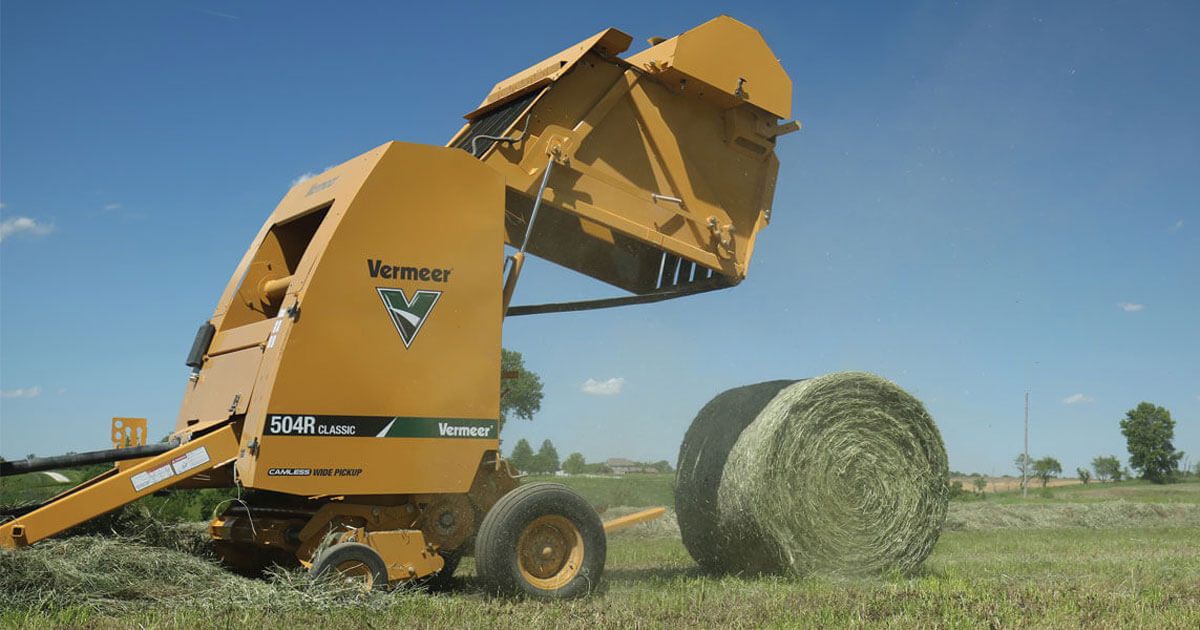
Round balers turn cut, dried hay into cylindrical bales that can be stored outdoors with minimal spoilage — a significant advantage over square bales for operations without covered storage. For small farms running 10-100 acres of hay, selecting the right round baler means matching bale size, tractor requirements, and throughput to your actual operation rather than buying capability you’ll never use.
According to ASABE standards, round bales range from small “mini” bales (3’x3’) weighing 200-400 lbs to full-size bales (5’x6’) weighing 800-1,500 lbs depending on crop density. Small farm operations typically produce 4’x4’ or 4’x5’ bales — large enough for efficient handling but manageable with compact and utility tractors.
Matching Baler to Tractor
The most common mistake in baler selection is buying a baler that exceeds your tractor’s PTO capacity. If you are still selecting a tractor, our compact tractor guide covers PTO HP ratings and how gross HP translates to actual PTO output. According to manufacturer specifications across the category:
| Bale Size | Minimum PTO HP | Recommended Tractor HP | Typical Baler Weight |
|---|---|---|---|
| 3’ x 3’ (mini) | 15-20 HP | 25-35 HP | 1,200-2,000 lbs |
| 4’ x 4’ | 25-35 HP | 40-55 HP | 2,500-4,000 lbs |
| 4’ x 5’ | 35-50 HP | 50-75 HP | 3,500-5,500 lbs |
| 5’ x 6’ (full) | 50-80 HP | 75-100+ HP | 5,000-8,000+ lbs |
Beyond PTO horsepower, verify your tractor’s:
- 3-point hitch lift capacity (for mounted models) or drawbar (for pull-type)
- Hydraulic remotes: Most balers need 1-2 sets of rear remotes for tailgate and wrapping functions
- PTO speed: 540 RPM is standard for small/mid-size balers; some larger models require 1000 RPM
Top Round Balers for Small Operations
Vermeer 504R Classic — Best Overall for Small Farms
| Specification | Value |
|---|---|
| Bale Size | 4’ x 5’ (adjustable 3.5’-5’ diameter) |
| Chamber Type | Fixed chamber |
| PTO Requirement | 40 HP minimum (540 RPM) |
| Pickup Width | 51” |
| Net Wrap | Optional |
| Twine Tie | Standard (2 arms) |
| Baler Weight | 4,300 lbs |
| Price Range | $18,000-$24,000 (new) |
According to Vermeer’s specifications, the 504R Classic uses a fixed-chamber design with 4 belts and a full-width floor roller for consistent bale shape. The 51” pickup width accommodates standard small-farm windrows. Vermeer’s dealer network is extensive in agricultural regions, with most dealers maintaining parts inventory for current models.
Best for: Small farms running 25-100 acres of hay with 50+ HP tractors. The fixed-chamber design is simpler to maintain than variable-chamber alternatives.
John Deere 450M — Best Compact Round Baler
| Specification | Value |
|---|---|
| Bale Size | 4’ x 4.7’ maximum |
| Chamber Type | Fixed chamber |
| PTO Requirement | 35 HP minimum (540 RPM) |
| Pickup Width | 53” |
| Net Wrap | Optional |
| Twine Tie | Standard |
| Baler Weight | 3,800 lbs |
| Price Range | $16,000-$21,000 (new) |
Per John Deere’s product documentation, the 450M is designed specifically for compact and utility tractors in the 35-60 HP range. The MegaWide pickup uses 5-bar design for cleaner field pickup in light windrows. The smaller maximum bale diameter (4.7’) keeps bale weight manageable for lighter tractors during transport and handling.
Best for: Operations with 35-55 HP tractors that need a properly matched baler without overloading the tractor. The 4’ width fits standard equipment well.
Massey Ferguson RB3130F — Best Value Full-Size
| Specification | Value |
|---|---|
| Bale Size | 4’ x 5’ (adjustable) |
| Chamber Type | Fixed chamber |
| PTO Requirement | 45 HP minimum (540 RPM) |
| Pickup Width | 53” |
| Net Wrap | Standard |
| Twine Tie | Standard |
| Baler Weight | 4,600 lbs |
| Price Range | $20,000-$26,000 (new) |
According to Massey Ferguson’s specifications, the RB3130F includes net wrap as standard equipment — a feature that’s optional (and $1,500-$3,000 extra) on many competing models. Per manufacturer data, net-wrapped bales shed water better than twine-tied bales, reducing dry matter loss by 5-15% during outdoor storage. The hydraulic pickup flotation system adjusts ground pressure to reduce crop contamination.
Best for: Farms storing bales outdoors where weather protection matters. The included net wrap pays for itself over 2-3 seasons through reduced spoilage.
Abbriata M60 — Best for Compact Tractors (Mini Baler)
| Specification | Value |
|---|---|
| Bale Size | 3’3” x 3’3” maximum |
| Chamber Type | Fixed chamber |
| PTO Requirement | 15 HP minimum (540 RPM) |
| Pickup Width | 40” |
| Net Wrap | Not available |
| Twine Tie | Standard |
| Baler Weight | 1,320 lbs |
| Price Range | $8,000-$12,000 (new) |
The Abbriata M60 is an Italian-made mini round baler specifically designed for compact tractors. Per the manufacturer, the M60 produces bales light enough for one person to handle. The 15 HP PTO minimum makes it compatible with subcompact tractors like the Kubota BX series and John Deere 1025R.
Best for: Small acreage (under 10 acres) with subcompact tractors. The bales are manageable without specialized handling equipment like spear attachments or bale forks.
Comparison Summary
| Model | Bale Size | Min PTO HP | Net Wrap | Price |
|---|---|---|---|---|
| Vermeer 504R Classic | 4’ x 5’ | 40 HP | Optional | $18-24K |
| John Deere 450M | 4’ x 4.7’ | 35 HP | Optional | $16-21K |
| Massey Ferguson RB3130F | 4’ x 5’ | 45 HP | Standard | $20-26K |
| Abbriata M60 | 3.3’ x 3.3’ | 15 HP | No | $8-12K |
Fixed Chamber vs. Variable Chamber
Round balers use one of two designs:
Fixed chamber balers form bales against a fixed set of rollers or belts. The bale grows until it fills the chamber, producing consistent-diameter bales. According to manufacturer data, fixed-chamber balers are simpler mechanically, easier to maintain, and less expensive. They handle dry hay well but can struggle with very dense crops.
Variable chamber balers use belts that expand as the bale grows, allowing adjustable bale diameter. Per industry specifications, these balers produce denser core starts (better for wet conditions) and handle varying crop volumes more flexibly. However, they cost 20-40% more and have more components subject to wear.
For small farms making dry grass hay, fixed-chamber balers offer the best balance of simplicity, reliability, and cost. Variable-chamber models become more justified for operations baling multiple crop types or working in wetter climates.
Who This Is NOT For
- Farms producing fewer than 50 bales per year. At that volume, hiring custom baling ($12-20 per bale including twine/wrap) is almost certainly more economical than owning equipment that depreciates whether you use it or not
- Operations with tractors under 25 HP. Mini round balers exist, but options below 25 HP PTO are extremely limited. Square balers have more offerings in the compact tractor range
- Producers selling hay commercially. Commercial hay buyers strongly prefer small square bales (easier to handle and resell) or large commercial round bales (5’x6’). The mid-size 4’x4’ and 4’x5’ bales common to small farms have limited resale market
- Properties without bale handling equipment. A 4’x5’ round bale weighs 600-1,000+ lbs. Moving these requires a tractor with a bale spear, pallet forks, or a dedicated bale mover. Budget $200-$800 for handling attachments
Buying Used Round Balers
Used round balers represent significant savings — 40-60% off new prices is common for well-maintained equipment in the 5-15 year age range. Key inspection points per industry service guidelines:
- Belt condition: Check for cracks, delamination, and uneven wear. Belt replacement costs $1,500-$3,000
- Pickup teeth: Bent or missing teeth reduce feeding efficiency. Individual teeth are inexpensive but labor to replace adds up
- Bearings: Listen for noise during operation. Failed bearings on rollers or idlers are common wear items
- Chain condition: Drive chains stretch over time. Excessive slack indicates wear throughout the drive system
- Twine/net mechanism: Test-run through a complete tying or wrapping cycle. These mechanisms are finicky when worn
Sources
- Vermeer 504R Classic specifications (vermeer.com)
- John Deere 450M product documentation (deere.com)
- Massey Ferguson RB3130F specifications (masseyferguson.com)
- Abbriata M60 product data (abbriata.com)
- ASABE Standard S351.3 for round bale dimensions and density
- University of Missouri Extension — Round Bale Storage Losses guide