Best Small Square Balers for Small Farms in 2026
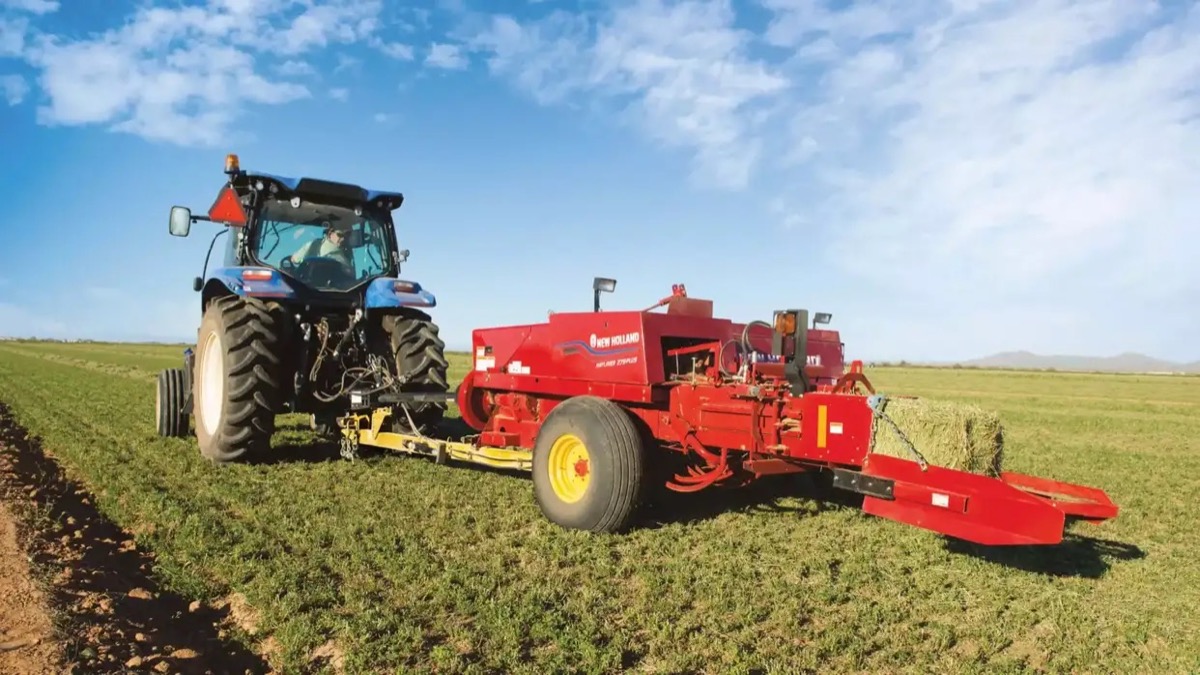
Small square balers produce rectangular bales — typically 14”×18” or 16”×18”, weighing 40-75 lbs each — that one person can lift, stack, and transport without machinery. For small farms, this matters: square bales sell at a premium in the horse hay market, stack efficiently in barn lofts, and don’t require the bale spears and front-end loaders that round bales demand. The tradeoff is that square bales must be stored under cover — left in the weather, they spoil in weeks rather than months.
New vs. Used: The Honest Math
Before comparing specific models, small farm operators need to confront a basic economic reality. New small square balers cost $22,000-$35,000. At that price, the math only works if you’re producing 500+ bales per year or selling hay commercially. According to industry data, custom baling runs $0.50-$1.50 per bale (plus twine), meaning an operator producing 300 bales annually would spend $150-$450 per year on custom work versus $22,000+ for their own equipment.
The used market is where most small operations find their baler. Models from the 2000s-2010s sell for $4,000-$15,000 depending on condition, brand, and knotter reliability. The buying-used section below covers what to inspect.
Key Specifications Explained
Bale Size
Small square balers produce two standard cross-sections:
- 14”×18”: The traditional size. Bales weigh 40-60 lbs at standard length. One person can handle these all day. Preferred by horse hay customers who break bales into flakes for feeding.
- 16”×18”: Slightly larger cross-section. Bales weigh 50-75 lbs at standard length. Per manufacturer data, 16×18 bales reduce the total number of bales per ton by approximately 15%, meaning fewer bales to handle and stack for the same tonnage.
Bale length is adjustable via the bale chamber trip mechanism, typically from 32” to 48”. Most operators set length at 36-40” for uniform stacking.
Knotter System
The knotter is the heart of any square baler — it ties twine around each completed bale and cuts it free. According to manufacturer service data, knotter-related failures account for the majority of field breakdowns. Two designs dominate:
- Single-knot (Deere/NH style): One knot per twine strand. Simpler mechanism, slightly easier to time and adjust.
- Double-knot (some European models): Two knots for stronger tie. More complex but less prone to slipping in tough, stemmy crops.
Regardless of type, knotter performance depends on proper twine tension, clean needle timing, and sharp knife blades. A baler with well-maintained knotters running quality twine will mis-tie fewer than 1 in 200 bales according to manufacturer benchmarks.
Plunger Speed and Throughput
Plunger strokes per minute (SPM) determine maximum baling speed. Per manufacturer specifications:
| Plunger Speed | Throughput | Best For |
|---|---|---|
| 80 SPM | ~60-80 bales/hr | Light hay, slow ground speed |
| 93 SPM | ~80-100 bales/hr | Standard hay operations |
| 104+ SPM | ~100-120 bales/hr | High-volume, commercial speed |
Small farm operators rarely need more than 80-93 SPM. Higher plunger speeds require faster ground speed to keep the chamber fed, which demands more PTO horsepower and heavier tractors.
Top Small Square Balers
New Holland BC5070 — Best Overall New Small Square Baler
| Specification | Value |
|---|---|
| Bale Size | 14”×18” or 16”×18” (model dependent) |
| Plunger Speed | 93 SPM |
| PTO Requirement | 35 HP minimum (540 RPM) |
| Pickup Width | 53” |
| Number of Knotters | 2 (double-knot) |
| Hyd-Swing Tongue | Standard |
| Baler Weight | 3,200 lbs |
| Price Range | $28,000-$35,000 (new) |
According to New Holland’s specifications, the BC5070 is their mid-range small square baler built on the same platform that has defined the category since the Super Hayliner era. The 53” SuperSweep pickup uses closely spaced teeth with hydraulic flotation to handle varying windrow sizes without plugging. Per manufacturer data, the hyd-swing tongue allows sharp turns at field ends without jackknifing.
The BC5070 uses New Holland’s double-knot system, which ties two knots per twine strand for secure bale retention. The wide-feed design funnels crop material across the full width of the bale chamber for uniform density.
Best for: Operators making 500+ bales per season who want a reliable new machine with strong dealer support. New Holland’s agricultural dealer network is the largest in North America, and parts availability for the BC series is excellent.
Massey Ferguson 1840 — Best Value New Square Baler
| Specification | Value |
|---|---|
| Bale Size | 14”×18” |
| Plunger Speed | 93 SPM |
| PTO Requirement | 35 HP minimum (540 RPM) |
| Pickup Width | 53” |
| Number of Knotters | 2 |
| CropSaver Option | Available (moisture sensing) |
| Baler Weight | 3,100 lbs |
| Price Range | $24,000-$30,000 (new) |
Per Massey Ferguson’s product documentation, the 1840 is designed as a straightforward, durable baler without unnecessary complexity. The optional CropSaver moisture sensing system measures hay moisture at the pickup and displays readings in the cab, helping operators avoid baling hay above the 18-20% moisture threshold where mold and heating become risks.
According to manufacturer specs, the 1840 uses a cam-driven plunger mechanism that delivers consistent compression regardless of crop type. The spring-loaded pickup teeth retract over obstructions to reduce the risk of rock or debris damage.
Best for: Cost-conscious buyers who want a quality new baler without the New Holland premium. The CropSaver moisture option is particularly valuable for operators selling into the horse hay market, where buyers reject bales with visible mold or dust.
Kuhn FB 2130 — Best European-Built Option
| Specification | Value |
|---|---|
| Bale Size | 14”×18” |
| Plunger Speed | 96 SPM |
| PTO Requirement | 32 HP minimum (540 RPM) |
| Pickup Width | 55” |
| Number of Knotters | 2 |
| OptiFlow Pickup | Standard |
| Baler Weight | 2,900 lbs |
| Price Range | $22,000-$28,000 (new) |
According to Kuhn’s specifications, the FB 2130 uses their OptiFlow pickup system with a wider-than-average 55” pickup and closely spaced cam-driven teeth. Per the product data sheet, the unit’s lighter overall weight (2,900 lbs) reduces the tractor size requirement — the 32 HP PTO minimum is among the lowest in the full-size small square baler category.
Kuhn’s dealer network in North America is smaller than New Holland’s but growing, particularly in the Northeast and Midwest dairy regions. Parts availability through Kuhn North America is generally reliable for current models, though turnaround times may be longer in less-served regions.
Best for: Operators with 35-50 HP tractors looking for a lighter baler that doesn’t overload a mid-range utility tractor. The wider pickup handles heavier windrows without requiring as much ground speed. If you’re pairing this with a compact tractor, the low PTO requirement is a practical advantage.
John Deere 348 — Best Used Square Baler
| Specification | Value |
|---|---|
| Bale Size | 14”×18” |
| Plunger Speed | 80 SPM |
| PTO Requirement | 35 HP minimum (540 RPM) |
| Pickup Width | 52” |
| Number of Knotters | 2 |
| Production Years | ~1997-2012 |
| Baler Weight | 3,300 lbs |
| Price Range | $4,000-$12,000 (used) |
The John Deere 348 was discontinued around 2012 when Deere exited the small square baler market, but it remains one of the most popular and widely available used small square balers in North America. According to service data, the 348’s knotter system is well-documented, with extensive aftermarket parts availability from multiple suppliers.
Per industry references, the 348’s 80 SPM plunger speed is adequate for small operations but slower than current-production competitors. The lower speed is actually an advantage for operators running older or less powerful tractors — the reduced throughput demands less PTO power under heavy crop conditions.
Best for: Small operations wanting proven reliability at a fraction of new-equipment cost. Thousands of these balers are still working across the country. The extensive aftermarket support and large knowledge base among agricultural mechanics make the 348 one of the lowest-risk used equipment purchases in the hay category.
Comparison Summary
| Model | Bale Size | Min PTO HP | Plunger SPM | Price Range | Status |
|---|---|---|---|---|---|
| New Holland BC5070 | 14×18” / 16×18” | 35 HP | 93 | $28-35K | New |
| Massey Ferguson 1840 | 14×18” | 35 HP | 93 | $24-30K | New |
| Kuhn FB 2130 | 14×18” | 32 HP | 96 | $22-28K | New |
| John Deere 348 | 14×18” | 35 HP | 80 | $4-12K | Used only |
Essential Accessories
Regardless of which baler you choose, these items are necessary for safe, efficient baling:
Baler twine: Small square balers use sisal or synthetic twine. Synthetic (polypropylene) twine is stronger and more weather-resistant but costs slightly more. Budget 1 box of twine per 300-500 bales depending on bale length settings.
Check baler twine prices on Amazon
Hay moisture meter: Baling above 18-20% moisture causes mold, heating, and potential spontaneous combustion in stored hay. A probe-style moisture meter ($30-$80) is essential insurance.
Check hay moisture meters on Amazon
PTO shaft shield: Square baler PTO shafts spin at 540 RPM and are responsible for a disproportionate share of farm injuries. Per OSHA agricultural safety data, PTO entanglement is among the most common and most severe farm machinery injuries. Replace cracked or missing shields immediately.
Check PTO shaft shields on Amazon
Buying Used: What to Inspect
Used small square balers are the right choice for most small farms, but a bad purchase can cost more in repairs than a new baler costs outright. Per industry service guidelines, inspect these components in priority order:
-
Knotters: Run the baler through 10-20 cycles and check for mis-ties. Clean knotters with compressed air and inspect knife blades for sharpness. Knotter rebuilds cost $500-$1,500 per side.
-
Plunger and shear bolts: The plunger drives hay into the chamber with significant force. Check plunger bearings for play and inspect the shear bolt mechanism — this is the safety device that prevents catastrophic damage when the chamber plugs.
-
Pickup teeth and drive: Bent or missing teeth cause uneven feeding. Check the pickup drive chain for stretch and the cam mechanism for wear.
-
Bale chamber wear plates: These steel plates line the bale chamber and are wear items. Heavily grooved plates reduce bale density and increase power demand. Replacement plates are $200-$600 for a full set.
-
Frame and tongue: Look for cracks at stress points, particularly around the hitch, tongue pivot, and plunger housing mounts. Frame cracks are expensive to repair properly and indicate hard use or abuse.
Ask for maintenance records. An operator who changed knotter oil, greased daily, and replaced wear items on schedule has a baler worth paying more for than one with 500 fewer bales but no maintenance history.
Who This Is NOT For
- Operations producing fewer than 200 bales per year. At that volume, custom baling at $0.50-$1.50/bale costs $100-$300 annually. No ownership scenario competes with that until you’re above 500 bales — and even then, only if you value your labor at a low rate
- Farms without covered storage. Small square bales absorb moisture rapidly and spoil within weeks when exposed to rain. According to University of Wisconsin Extension research, uncovered square bales can lose 25-50% of their nutritive value within 60 days. If you don’t have barn space, round bales are the appropriate choice
- Operators working alone without a bale accumulator or wagon. A baler drops individual bales on the ground. Without a bale accumulator ($2,000-$5,000) or a trailing bale wagon, someone has to pick up every bale by hand from the field — often in 90°F+ heat. Solo operators baling more than 100 bales per cutting need a handling system
- Properties with steep terrain. Small square balers are top-heavy when full and can tip on hillsides. Per manufacturer safety guidelines, most balers should not operate on slopes exceeding 15-20%. Hilly terrain is better served by round balers, which have a lower center of gravity during operation
Sources
- New Holland BC5070 product specifications (agriculture.newholland.com)
- Massey Ferguson 1840 product documentation (masseyferguson.com)
- Kuhn FB 2130 product data sheet (kuhn.com)
- John Deere 348 archived specifications and service data (deere.com)
- University of Wisconsin Extension — Square Bale Hay Storage and Handling
- OSHA Agricultural Safety — PTO Safety Guidelines