Best Utility ATVs for Farm Use in 2026
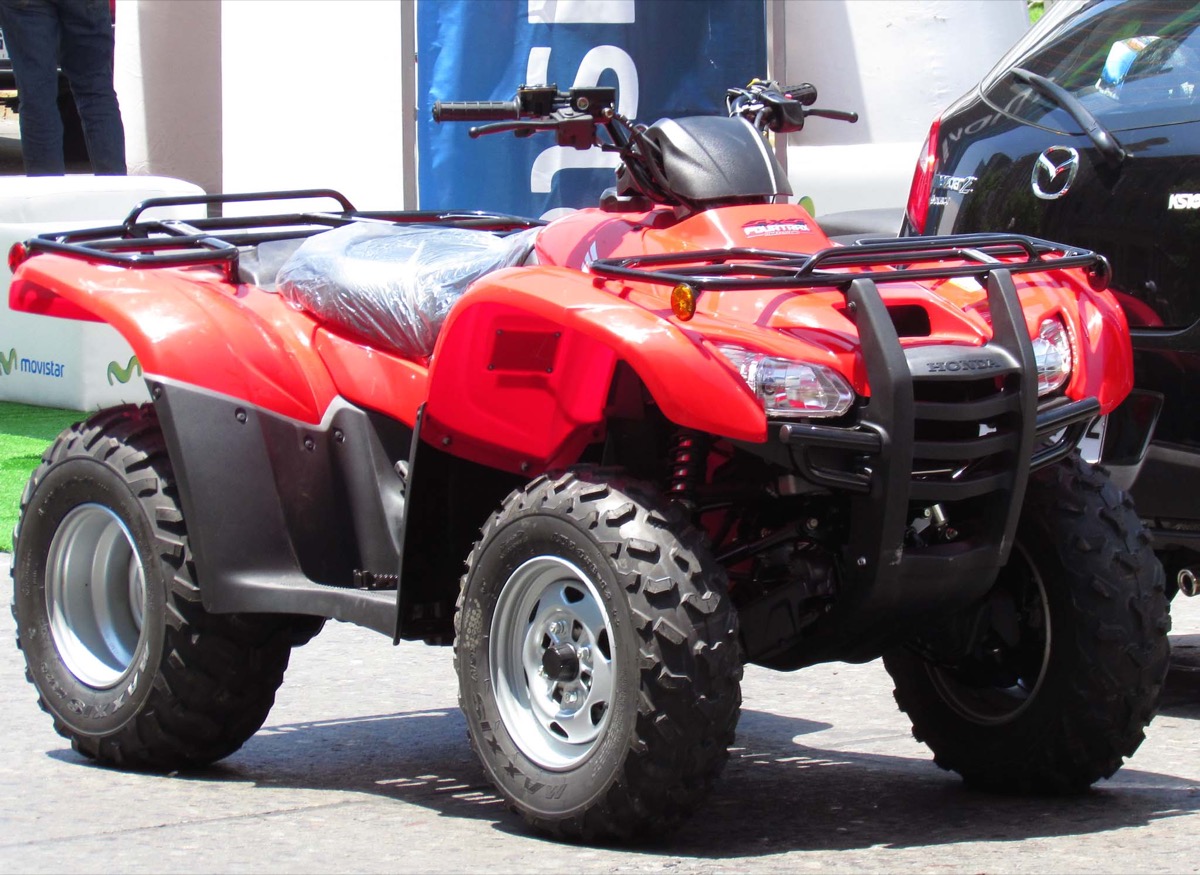
A utility ATV fills a specific niche on working farms — lighter, narrower, and more maneuverable than a side-by-side (UTV) but far more capable than walking or driving a truck across uneven ground. For checking fence lines, hauling feed to remote pastures, spraying weeds along tree lines, and covering rough terrain that a pickup cannot reach, a utility-class four-wheeler remains one of the most time-efficient tools on small to mid-size operations.
The distinction matters: sport and recreational ATVs prioritize speed, suspension travel, and rider experience. Utility ATVs prioritize towing capacity, rack space, 4WD reliability, and the ability to run daily for years without major service. The five models below are evaluated strictly on farm utility — engine durability, hauling specs, fuel efficiency, and long-term ownership cost.
What Makes a Farm ATV Different from a Sport ATV
Sport ATVs are built to go fast and handle aggressive terrain. Farm ATVs are built to work. The practical differences include:
- Towing capacity: Utility ATVs are rated for 500-1,300+ lbs of towing. Sport models often have no towing rating at all
- Rack capacity: Front and rear racks carry tools, fencing supplies, salt blocks, and sprayer tanks. Rated capacities range from 66-176 lbs across racks
- 4WD system: Selectable 2WD/4WD with locking differentials for mud, snow, and steep grades. Some models offer electronic differential lock for true all-wheel traction
- Low-range gearing: Crawling speed for precise maneuvering around livestock, along fence rows, and through gates
- Fuel capacity: Larger tanks (3.4-5.3 gallons) for extended range across large properties without refueling
- Hitch receiver: Standard or available receiver hitch for pulling carts, trailers, small implements, and drag harrows
Top Utility ATVs for Farm Work
Honda FourTrax Rancher 420 — Best Overall
| Specification | Value |
|---|---|
| Engine | 420cc longitudinal single-cylinder, liquid-cooled |
| Transmission | Automatic DCT or manual 5-speed (model dependent) |
| Towing Capacity | 848 lbs |
| Rack Capacity (Front/Rear) | 77 lbs / 154 lbs |
| 4WD System | Selectable 2WD/4WD with locking front differential |
| Fuel Capacity | 3.4 gallons |
| Dry Weight | 573-615 lbs (varies by drivetrain) |
| Ground Clearance | 7.5 inches |
| Price Range | $5,300-$8,300 |
According to Honda’s specifications, the FourTrax Rancher 420 uses a longitudinal-mount engine layout that places the crankshaft inline with the chassis — reducing drivetrain complexity and improving power transfer to the wheels. Per Honda’s product data, the automatic Dual Clutch Transmission (DCT) option provides clutchless shifting while maintaining the mechanical efficiency of a conventional gearbox, avoiding the belt-wear issues common to CVT transmissions.
The Rancher’s reputation in agricultural settings comes primarily from Honda’s engineering approach to reliability. Per manufacturer documentation, the engine uses a single overhead cam and roller rocker arms designed for longevity over peak power output. The 420cc displacement is modest compared to larger competitors, but it produces adequate torque for daily farm tasks while consuming less fuel.
Best for: Farmers who prioritize long-term reliability and low maintenance over raw power. The DCT option is particularly useful for operators who spend hours in the saddle checking fence and moving between pastures. Check ATV helmets on Amazon
Polaris Sportsman 570 — Best Power-to-Value
| Specification | Value |
|---|---|
| Engine | 567cc ProStar single-cylinder, liquid-cooled |
| Transmission | Automatic PVT (CVT) with EBS |
| Towing Capacity | 1,350 lbs |
| Rack Capacity (Front/Rear) | 90 lbs / 180 lbs |
| 4WD System | True on-demand AWD with locking front differential |
| Fuel Capacity | 4.5 gallons |
| Dry Weight | 699 lbs |
| Ground Clearance | 11.5 inches |
| Price Range | $7,000-$9,500 |
Per Polaris specifications, the Sportsman 570 delivers the highest towing capacity in this comparison at 1,350 lbs — roughly 60% more than the Honda Rancher. According to manufacturer data, the ProStar engine produces 44 horsepower, and the Electronic Power Steering (EPS) reduces steering effort at low speeds when navigating around obstacles and through tight spaces.
The True AWD system, per Polaris documentation, automatically engages all four wheels when the rear tires detect slip, then returns to 2WD on firm ground. This eliminates the need to manually switch between drive modes while working. The 11.5 inches of ground clearance is the highest in this group, which matters for operations crossing ditches, creek beds, and rutted pasture roads.
Best for: Operations needing serious towing capability — pulling utility trailers, small harrows, or feed carts across property. The larger fuel tank and higher ground clearance suit farms with rougher terrain. Check ATV winches on Amazon
Yamaha Grizzly 700 — Best for Heavy-Duty Farm Work
| Specification | Value |
|---|---|
| Engine | 686cc single-cylinder, liquid-cooled, 4-valve |
| Transmission | Ultramatic CVT with all-wheel engine braking |
| Towing Capacity | 1,322 lbs |
| Rack Capacity (Front/Rear) | 110 lbs / 176 lbs |
| 4WD System | On-Command selectable 2WD/4WD/4WD with diff lock |
| Fuel Capacity | 4.8 gallons |
| Dry Weight | 686 lbs |
| Ground Clearance | 11.3 inches |
| Price Range | $9,500-$11,500 |
According to Yamaha’s specifications, the Grizzly 700 carries the largest engine displacement in this comparison at 686cc, producing substantial low-end torque for hauling heavy loads and climbing grades. Per manufacturer data, the Ultramatic CVT is a centrifugal wet clutch design that Yamaha states is more durable than dry-clutch CVT systems used by some competitors, with engine braking applied to all four wheels in 4WD mode.
The On-Command 4WD system provides three selectable modes per Yamaha’s documentation: 2WD for flat ground and road travel, 4WD for moderate off-road conditions, and 4WD with locked front differential for maximum traction in deep mud or snow. The 176 lb rear rack capacity is the highest in this group, allowing heavier loads of fencing supplies, tools, or electric fence chargers to be transported directly on the machine.
Best for: Larger farms (20+ acres) with demanding terrain — steep grades, heavy mud, or regular heavy hauling. The higher displacement and rack capacity justify the premium price for operations that push an ATV hard daily. Check ATV sprayer attachments on Amazon
Can-Am Outlander 570 — Best Towing Capacity
| Specification | Value |
|---|---|
| Engine | 567cc Rotax single-cylinder, liquid-cooled |
| Transmission | CVT with engine braking and high/low range |
| Towing Capacity | 1,300 lbs |
| Rack Capacity (Front/Rear) | 100 lbs / 176 lbs |
| 4WD System | Visco-Lok QE auto-locking front differential |
| Fuel Capacity | 5.3 gallons |
| Dry Weight | 695 lbs |
| Ground Clearance | 10.5 inches |
| Price Range | $7,500-$9,500 |
Per Can-Am’s product documentation, the Outlander 570 uses the Rotax engine platform — a design lineage shared with BRP’s marine and snowmobile engines. According to manufacturer specifications, the Visco-Lok QE front differential uses a viscous coupling that progressively transfers torque to the wheel with the most traction, without requiring driver input or electronic controls. This purely mechanical system has fewer failure points than electronically controlled differentials.
The 5.3-gallon fuel tank is the largest in this comparison, per Can-Am’s specifications, providing the longest range between fill-ups. For farms covering extensive acreage where refueling is inconvenient, this is a meaningful practical advantage. The high/low range sub-transmission provides a true low gear for maximum torque when pulling heavy loads or crawling steep inclines.
Best for: Farms with large acreage requiring extended range and strong towing. The mechanical simplicity of the Visco-Lok differential suits operators who prefer fewer electronics to maintain. Check ATV cargo baskets on Amazon
Kawasaki Brute Force 300 — Best Budget Option
| Specification | Value |
|---|---|
| Engine | 271cc single-cylinder, liquid-cooled |
| Transmission | CVT with high/low range and reverse |
| Towing Capacity | 500 lbs |
| Rack Capacity (Front/Rear) | 66 lbs / 132 lbs |
| 4WD System | Selectable 2WD/4WD with variable front differential |
| Fuel Capacity | 3.4 gallons |
| Dry Weight | 519 lbs |
| Ground Clearance | 6.9 inches |
| Price Range | $4,800-$5,500 |
According to Kawasaki’s specifications, the Brute Force 300 is the lightest and most affordable utility ATV in this comparison. Per the manufacturer’s product data, the 271cc engine delivers adequate power for light farm tasks — checking fence, feeding small herds, and general property maintenance — while the lighter curb weight (519 lbs dry) minimizes turf damage and makes the machine easier to maneuver in tight spaces like barn aisles and between equipment.
The Brute Force 300 includes selectable 4WD, which is notable at this price point. Per Kawasaki’s documentation, the variable front differential provides a balance between straight-line traction and steering ease. While the towing capacity (500 lbs) and rack ratings are the lowest in this comparison, they remain sufficient for light utility trailers, small feed carts, and hand tools.
Best for: Smaller operations (under 15 acres) with lighter workloads, or as a second ATV for a farm that already has a larger machine. Also well-suited as an entry point for new property owners who need basic utility without the $8,000+ investment. Check ATV cover on Amazon
Comparison Summary
| Model | Engine | Towing | Rack (R) | 4WD | Fuel | Dry Weight | Price |
|---|---|---|---|---|---|---|---|
| Honda Rancher 420 | 420cc | 848 lbs | 154 lbs | 2WD/4WD lock | 3.4 gal | 573-615 lbs | $5.3-8.3K |
| Polaris Sportsman 570 | 567cc | 1,350 lbs | 180 lbs | True AWD | 4.5 gal | 699 lbs | $7-9.5K |
| Yamaha Grizzly 700 | 686cc | 1,322 lbs | 176 lbs | On-Command | 4.8 gal | 686 lbs | $9.5-11.5K |
| Can-Am Outlander 570 | 567cc | 1,300 lbs | 176 lbs | Visco-Lok QE | 5.3 gal | 695 lbs | $7.5-9.5K |
| Kawasaki Brute Force 300 | 271cc | 500 lbs | 132 lbs | 2WD/4WD | 3.4 gal | 519 lbs | $4.8-5.5K |
ATV vs. UTV: When Each Makes Sense
The decision between a utility ATV and a side-by-side (UTV) is not about which is “better” — it is about which fits the operation:
Choose an ATV when: The primary tasks are scouting, fence checking, spraying, and light hauling. ATVs navigate narrower trails, pass through standard gates without modification, cost roughly half the price of a comparable UTV, and are easier to load onto a truck bed for transport between properties.
Choose a UTV when: The operation regularly hauls 500+ lbs of cargo, carries a passenger, needs a dump bed, or requires a cab for all-weather comfort. UTVs offer dramatically higher payload and towing capacity at the cost of size, weight, and price.
For many small farms, an ATV handles 80% of daily tasks. The remaining 20% (heavy hauling, large cargo) falls to the tractor or truck. A UTV splits the difference but comes at a higher acquisition cost.
Who This Is NOT For
- Farms over 100 acres with daily heavy hauling. At this scale, a UTV or compact tractor is the more appropriate primary machine. An ATV may still serve as a supplementary vehicle for scouting and fence work
- Operations requiring passenger capacity. Single-rider ATVs are not designed for carrying a second person. Carrying a passenger on a single-rider ATV is a leading cause of ATV injuries according to the Specialty Vehicle Institute of America (SVIA). If two-person capacity is needed, choose a UTV
- Buyers who need a cargo bed. ATVs carry loads on racks and via towed trailers. If the operation regularly needs to dump loose materials (gravel, feed, mulch), a UTV with a dump bed is the right tool
- Properties with exclusively flat, improved roads. If the terrain does not require off-road capability, a used truck, golf cart, or even a bicycle covers the same ground at lower cost
- Operators with mobility limitations. Mounting and dismounting an ATV requires significant leg swing and core stability. UTVs with bench or bucket seats and doors are more accessible
Essential ATV Accessories for Farm Use
According to manufacturer accessory guides, the following attachments increase farm utility:
- Winch ($150-$400): 2,500-3,500 lb capacity handles self-recovery and pulling tasks. Essential for muddy properties. Check price on Amazon
- Sprayer attachment ($80-$250): 15-25 gallon tank for spot-spraying fence rows and weed patches. Check price on Amazon
- Rear cargo box ($100-$300): Expands carrying capacity beyond rack limits. Check price on Amazon
- Helmet ($50-$150): DOT-approved protection. Required by law in many states even on private land for operators under 18. Check price on Amazon
- Handlebar-mounted GPS/phone mount ($20-$50): Useful for property mapping and navigation on large acreage. Check price on Amazon
Sources
- Honda FourTrax Rancher 420 specifications (powersports.honda.com)
- Polaris Sportsman 570 product documentation (polaris.com)
- Yamaha Grizzly 700 specifications (yamahamotorsports.com)
- Can-Am Outlander 570 specifications (can-am.brp.com)
- Kawasaki Brute Force 300 product data (kawasaki.com)
- Specialty Vehicle Institute of America (SVIA) — ATV safety and classification standards