Best Cordless Framing Nailers for Contractors in 2026
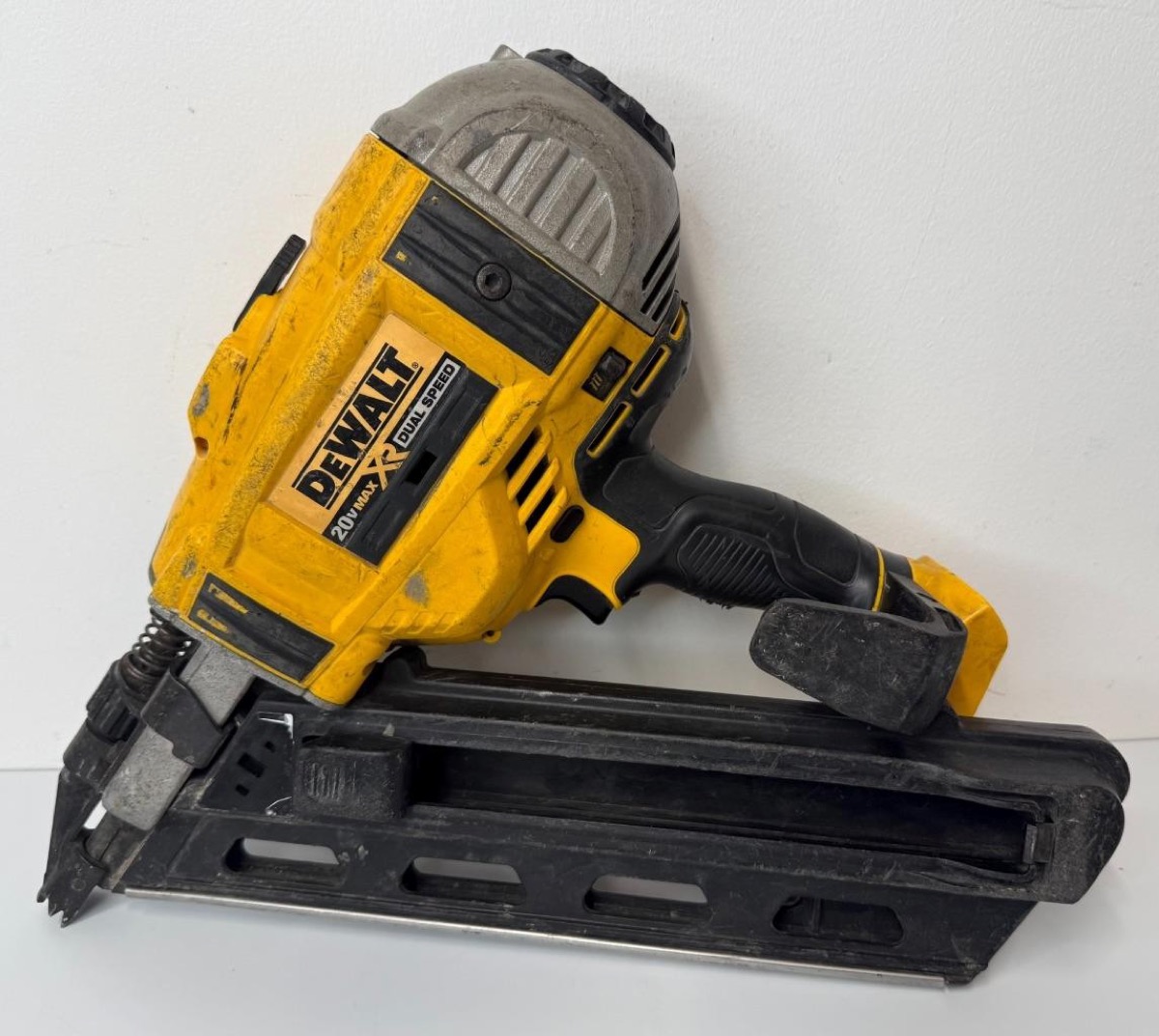
Cordless framing nailers have displaced pneumatic guns on a growing number of jobsites. The value proposition is straightforward: no compressor, no hose, no generator on sites without power. For remodeling, addition framing, and deck work — where a crew moves between locations or works in tight spaces — the elimination of air supply equipment saves meaningful setup and teardown time. But the tradeoffs are real. Cordless framing nailers cost $300-$500 versus $150-$250 for pneumatic equivalents, weigh 1-2 lbs more than their air-powered counterparts, and face performance degradation in cold weather that pneumatic tools do not. This guide compares five cordless framing nailers based on manufacturer specifications, covering the models that dominate contractor use in 2026.
Key Specifications Explained
Before comparing individual models, it is worth understanding what the spec sheet numbers actually mean for jobsite performance.
Drive type: Modern cordless framing nailers use one of two drive mechanisms. Battery-only models (DeWalt, Milwaukee, Makita, Metabo HPT) use a brushless motor to compress a spring or piston — the battery provides all the driving force. Fuel cell models (Paslode) use a small disposable gas cartridge ignited by a battery-powered spark to drive the piston, similar to a small internal combustion cycle. Battery-only models have lower per-shot operating costs (no fuel cells to replace), while fuel cell models are typically lighter and more compact.
Nail angle: Framing nailer magazines are angled to allow reach into corners and tight framing connections. The three common angles are 21 degrees (full round head), 30 degrees (paper tape collated, clipped or offset head), and 34 degrees (paper tape collated, clipped head). The angle determines which nail strips fit the tool — they are not interchangeable. Building codes in some jurisdictions require full round head nails for structural connections, which limits options to 21-degree nailers. In jurisdictions that accept clipped head nails, 30-degree and 34-degree nailers offer a steeper magazine angle that improves access in tight spaces.
Nail length range: Most cordless framing nailers accept nails from 2 inches to 3-1/2 inches, covering the standard range for wall framing (3-1/4” for 2x4 through plates), sheathing (2-3/8” for OSB/plywood to studs), and joist hangers (1-1/2” to 3” depending on hanger spec). The ability to handle the full 2” to 3-1/2” range without tool changes is expected at this price point.
Magazine capacity: Typically 50-60 nails per strip load. Higher capacity means fewer reloads, which matters on production framing where a nailer may fire 500+ nails per day.
Shots per charge: Manufacturer-rated shots per battery charge range from 500 to 1,200+ depending on battery size and nail length. These figures are measured under controlled conditions — expect 60-80% of rated capacity in field use, particularly in cold weather or when driving longer nails into dense lumber.
Weight: Cordless framing nailers weigh 7.5-9.5 lbs with battery. For overhead work — nailing roof sheathing, soffit, or second-story wall plates — every ounce matters across a full day. Pneumatic framing nailers typically weigh 7-8 lbs without the hose, but the hose itself adds drag and snag risk on scaffolding and roof work.
Top Cordless Framing Nailers
DeWalt DCN692 — Best Overall
| Specification | Value |
|---|---|
| Drive Type | Brushless motor (battery only) |
| Battery Platform | 20V MAX |
| Nail Angle | 30° paper tape |
| Nail Size Range | 2” – 3-1/2” |
| Nail Head Type | Clipped and offset round |
| Magazine Capacity | 55 nails |
| Shots Per Charge | Up to 1,200 (20V MAX 4.0 Ah) |
| Drive Modes | Sequential and bump fire |
| Weight (with battery) | 8.1 lbs |
| Warranty | 3 years |
| Price Range | $300-$380 (bare tool) |
Check DeWalt DCN692 prices on Amazon
According to DeWalt’s specifications, the DCN692 uses a brushless motor with a flywheel drive mechanism that stores energy in a spinning flywheel before releasing it to drive the nail. Per DeWalt’s data, this design delivers consistent drive power from the first nail to the last on a charge, without the gradual power drop that some spring-return designs exhibit as battery voltage decreases. The dual-speed selector allows operators to switch between high power (for 3-1/2” nails into LVL and engineered lumber) and low power (for 2” nails into softer framing lumber), which reduces over-driving on lighter fastening tasks. The tool-free depth adjustment dial provides flush drive control without hunting for an Allen wrench. Based on manufacturer data, the DCN692 fires up to 1,200 nails per charge on a 4.0 Ah battery, which is enough for a full day of remodeling work or half a day of production framing. The 30-degree magazine accepts paper tape collated nails with clipped or offset round heads.
Best for: General contractors and remodelers who need a reliable all-around cordless framing nailer on the DeWalt 20V MAX platform. The dual-speed feature and high shots-per-charge rating make it versatile across framing, sheathing, and deck work.
Milwaukee 2745-20 M18 FUEL — Best for Heavy Framing
| Specification | Value |
|---|---|
| Drive Type | Brushless motor (battery only) |
| Battery Platform | M18 |
| Nail Angle | 21° full round head |
| Nail Size Range | 2” – 3-1/2” |
| Nail Head Type | Full round head |
| Magazine Capacity | 55 nails |
| Shots Per Charge | Up to 1,000 (M18 5.0 Ah HIGH OUTPUT) |
| Drive Modes | Sequential and contact (bump fire) |
| Weight (with battery) | 8.8 lbs |
| Warranty | 5 years |
| Price Range | $350-$420 (bare tool) |
Check Milwaukee 2745-20 prices on Amazon
Per Milwaukee’s documentation, the 2745-20 uses a POWERSTATE brushless motor designed to deliver the drive force needed for full round head nails — which require more energy to seat than clipped head nails due to the larger head diameter displacing more wood. The 21-degree magazine angle is the critical differentiator: full round head nails meet structural fastening code requirements in all U.S. jurisdictions, including areas where clipped head nails are prohibited (notably several counties in hurricane-prone regions of Florida and the Gulf Coast). According to Milwaukee’s specifications, the REDLINK PLUS intelligence system protects against overload and overheating during sustained high-volume nailing. The 5-year tool warranty is the longest in this comparison. At 8.8 lbs with battery, the 2745-20 is the heaviest nailer here — a noticeable difference during overhead work. Milwaukee rates the tool at up to 1,000 shots per charge on a 5.0 Ah HIGH OUTPUT battery.
Best for: Framers working in jurisdictions that require full round head nails, or crews doing heavy structural framing where code compliance demands a 21-degree nailer. The M18 platform integration is a practical advantage for crews already running Milwaukee tools.
Makita XNB02Z — Best Lightweight Option
| Specification | Value |
|---|---|
| Drive Type | Brushless motor (battery only) |
| Battery Platform | 18V LXT |
| Nail Angle | 21° full round head |
| Nail Size Range | 2” – 3-1/2” |
| Nail Head Type | Full round head |
| Magazine Capacity | 64 nails |
| Shots Per Charge | Up to 890 (18V LXT 5.0 Ah) |
| Drive Modes | Sequential and contact |
| Weight (with battery) | 8.2 lbs |
| Warranty | 3 years |
| Price Range | $300-$370 (bare tool) |
Check Makita XNB02Z prices on Amazon
According to Makita’s specifications, the XNB02Z achieves a lower weight than competing 21-degree nailers through a compact motor and drive mechanism design. The 64-nail magazine capacity is the highest in this comparison, reducing reload frequency on production framing. Per Makita’s data, the tool uses a spring-loaded drive mechanism with an electric motor return, which eliminates the flywheel warm-up time that some competing designs require. The anti-dry fire mechanism prevents the tool from firing when the magazine is empty, reducing damage to workpieces. Makita rates the XNB02Z at up to 890 shots per charge on a 5.0 Ah battery — lower than the DeWalt DCN692 but adequate for most remodeling and light framing days. The rafter hook is integrated for hands-free storage between nailing sequences. The 18V LXT platform is one of the largest cordless ecosystems available, with 200+ tools sharing the same battery format.
Best for: Contractors on the Makita 18V LXT platform who want a 21-degree full round head nailer with the lowest weight and highest magazine capacity in its class. The reduced weight is particularly noticeable during roof sheathing and overhead wall plate nailing.
Paslode CF325XP — Best for Remodeling and Tight Spaces
| Specification | Value |
|---|---|
| Drive Type | Fuel cell + battery ignition |
| Battery Platform | Proprietary 7.4V lithium-ion |
| Nail Angle | 30° paper tape |
| Nail Size Range | 2” – 3-1/4” |
| Nail Head Type | Clipped and offset round |
| Magazine Capacity | 55 nails |
| Shots Per Fuel Cell | Up to 1,200 |
| Drive Modes | Sequential and bump fire |
| Weight (with battery and fuel cell) | 7.2 lbs |
| Warranty | 5 years (consumer) / 2 years (commercial) |
| Price Range | $320-$390 |
Check Paslode CF325XP prices on Amazon
Per Paslode’s documentation, the CF325XP uses a fundamentally different drive mechanism than the battery-only models in this comparison. A disposable fuel cell containing combustible gas is ignited by a battery-powered spark, creating a small combustion event that drives the piston. This approach allows a much smaller battery (7.4V versus 18-20V) because the battery only powers the ignition and fan — not the drive force. The result is the lightest and most compact cordless framing nailer available at 7.2 lbs. According to Paslode’s specifications, each fuel cell provides approximately 1,200 shots, and the lithium-ion battery lasts through approximately 9,000 shots before recharging. The tradeoff is ongoing fuel cell costs: each cell runs $15-$20, adding roughly $0.01-$0.02 per shot in consumable costs that battery-only models do not incur. The maximum nail length is 3-1/4” rather than 3-1/2”, which covers standard wall framing but falls short for some engineered lumber and heavy timber connections.
Best for: Remodelers and trim carpenters who prioritize compactness and light weight over maximum power. The fuel cell design excels in tight spaces — attic framing, closet walls, and repair work — where a smaller, lighter tool reduces fatigue and improves access.
Metabo HPT NR1890DCR — Best Value
| Specification | Value |
|---|---|
| Drive Type | Brushless motor (battery only) |
| Battery Platform | MultiVolt 36V / 18V |
| Nail Angle | 21° full round head |
| Nail Size Range | 2” – 3-1/2” |
| Nail Head Type | Full round head |
| Magazine Capacity | 60 nails |
| Shots Per Charge | Up to 900 (MultiVolt 36V battery) |
| Drive Modes | Sequential and contact |
| Weight (with battery) | 8.6 lbs |
| Warranty | Lifetime lithium-ion tool warranty |
| Price Range | $280-$350 (bare tool) |
Check Metabo HPT NR1890DCR prices on Amazon
According to Metabo HPT’s specifications, the NR1890DCR uses the MultiVolt platform, which accepts both 36V MultiVolt batteries and 18V batteries (with reduced performance on 18V). The 36V operation provides strong drive power for full round head nails in dense lumber and engineered wood products. Per Metabo HPT’s data, the air spring drive system uses compressed air within a sealed cylinder to drive the nail — a mechanism that closely mimics the feel and response of a pneumatic nailer. This is a notable design choice: contractors transitioning from pneumatic tools may find the NR1890DCR’s firing response more familiar than the flywheel or spring-based systems in competing models. The 60-nail magazine capacity sits between the Makita’s 64 and the DeWalt’s 55. Metabo HPT’s lifetime lithium-ion tool warranty — which covers the tool body for the life of the product — is the most aggressive warranty in this category. At $280-$350, the NR1890DCR undercuts the Milwaukee 2745-20 by $50-$70 while offering comparable specifications.
Best for: Contractors seeking a 21-degree full round head nailer at the lowest price point in this comparison, or those who value the lifetime tool warranty. The pneumatic-like firing feel also makes it a strong option for crews transitioning from air-powered nailers.
Comparison Summary
| Model | Nail Angle | Nail Range | Magazine | Weight | Shots/Charge | Warranty | Price |
|---|---|---|---|---|---|---|---|
| DeWalt DCN692 | 30° | 2-3.5” | 55 | 8.1 lbs | 1,200 | 3 yr | $300-$380 |
| Milwaukee 2745-20 | 21° | 2-3.5” | 55 | 8.8 lbs | 1,000 | 5 yr | $350-$420 |
| Makita XNB02Z | 21° | 2-3.5” | 64 | 8.2 lbs | 890 | 3 yr | $300-$370 |
| Paslode CF325XP | 30° | 2-3.25” | 55 | 7.2 lbs | 1,200 | 5/2 yr | $320-$390 |
| Metabo HPT NR1890DCR | 21° | 2-3.5” | 60 | 8.6 lbs | 900 | Lifetime | $280-$350 |
Nail Angle Compatibility: 21 vs. 30 vs. 34 Degrees
The nail angle decision is not a preference — it is often a code requirement. Understanding the distinction before purchasing avoids expensive mistakes.
21-degree (full round head): The nail head is a complete circle, providing maximum holding power and pull-through resistance. Required by building codes in several hurricane-prone jurisdictions (notably parts of Florida, Texas Gulf Coast, and the Carolinas) for structural framing connections. Full round head nails are the most universally accepted fastener for framing. The 21-degree magazine angle is the shallowest, which slightly limits access in tight corners compared to steeper-angle tools.
30-degree (paper tape, clipped or offset head): The nail head is trimmed on one side (clipped) or shifted off-center (offset round) to allow tighter stacking in the magazine at a steeper angle. The steeper magazine provides better reach into corners and acute-angle framing connections. Paper tape collation breaks apart cleanly and leaves less debris than plastic collation. Accepted in most jurisdictions for general framing, but prohibited in some coastal wind zones for structural connections.
34-degree (paper tape, clipped head): The steepest magazine angle, offering the best access in tight spaces. Uses clipped head nails only. Subject to the same code restrictions as 30-degree clipped head nails. Less commonly available in cordless models.
For contractors working across multiple jurisdictions, a 21-degree nailer is the safest investment — full round head nails are accepted everywhere. For contractors working exclusively in areas that accept clipped heads, a 30-degree nailer offers practical access advantages in tight framing situations.
Cold Weather Performance
Temperature affects cordless framing nailer performance in ways that vary by drive type.
Battery-only models (DeWalt, Milwaukee, Makita, Metabo HPT): Lithium-ion batteries lose capacity in cold weather. According to battery manufacturer data, a lithium-ion cell at 20 degrees Fahrenheit delivers approximately 60-70% of its rated capacity compared to operation at 70 degrees Fahrenheit. This translates directly to fewer shots per charge. The drive mechanism itself (motor, flywheel, spring) is not temperature-sensitive, but the reduced battery capacity means more frequent battery swaps. Keeping spare batteries warm (in an insulated bag, in the truck cab) mitigates this issue.
Fuel cell models (Paslode): The combustion-based drive mechanism faces a different cold weather challenge. Fuel cell gas pressure drops in cold temperatures, reducing combustion efficiency and drive power. Per Paslode’s documentation, the tool includes a “cold start” procedure for sub-freezing operation, but contractors working in sustained cold (below 20 degrees Fahrenheit) report that fuel cell nailers require more frequent cleaning and may misfire. Conversely, the small battery in a fuel cell nailer is less affected by cold because it only powers ignition — not the drive mechanism.
For crews working in cold climates (northern states, winter framing), battery-only models with a rotation of warm spare batteries generally provide more consistent performance than fuel cell models. In moderate climates, the difference is negligible.
Who This Is NOT For
-
High-volume production framers. A crew framing tract houses or apartment complexes at 2,000+ nails per day is still better served by pneumatic nailers. The compressor and hose are a fixed setup cost that becomes trivial when amortized across thousands of nails. Pneumatic nailers are lighter, fire faster in sustained use, and have lower per-unit fastening costs. Cordless framing nailers make sense for moderate-volume work — not for production speed contests against an air-powered gun.
-
DIY homeowners building one deck or shed. A cordless framing nailer at $300-$420 (bare tool) plus $100-$200 in batteries is a significant investment for a single project. A pneumatic framing nailer at $150-$200 plus a $150-$250 pancake compressor totals roughly the same cost but provides equipment that also powers finish nailers, brad nailers, and inflation tasks. Alternatively, a framing nailer can often be rented for $40-$60 per day — the economically rational choice for a one-time project.
-
Anyone on a tight budget. The price premium for cordless over pneumatic is $100-$200+ for the nailer alone, plus the battery investment if not already on a compatible platform. That premium buys convenience, not additional fastening capability. For budget-constrained buyers, a pneumatic framing nailer delivers identical structural results at lower cost.
-
Finish carpentry and trim work. Framing nailers drive 2” to 3-1/2” nails that split trim material and leave oversized holes. Finish nailers (15-16 gauge) and brad nailers (18 gauge) are purpose-built for trim, casing, and millwork. Using a framing nailer for finish work is the wrong tool for the job regardless of brand or price point.
Related Guides
- Best Cordless Drills — battery platform decisions carry across all cordless tools
- Best Impact Drivers — the fastening companion to a framing nailer on every jobsite
- Best Circular Saws for Contractors — cut the lumber before you nail it
- Best Miter Saws for Contractors — precision crosscuts for framing, trim, and stair work
Sources
- DeWalt DCN692 product specifications and data sheets (dewalt.com)
- Milwaukee 2745-20 M18 FUEL product specifications (milwaukeetool.com)
- Makita XNB02Z product specifications (makitatools.com)
- Paslode CF325XP product specifications and technical documentation (paslode.com)
- Metabo HPT NR1890DCR MultiVolt product specifications (metabohpt.com)
- International Building Code (IBC) and International Residential Code (IRC) fastener requirements
- Battery performance characteristics per lithium-ion cell manufacturer data sheets