Best Portable Table Saws for Contractors and Jobsite Work (2026)
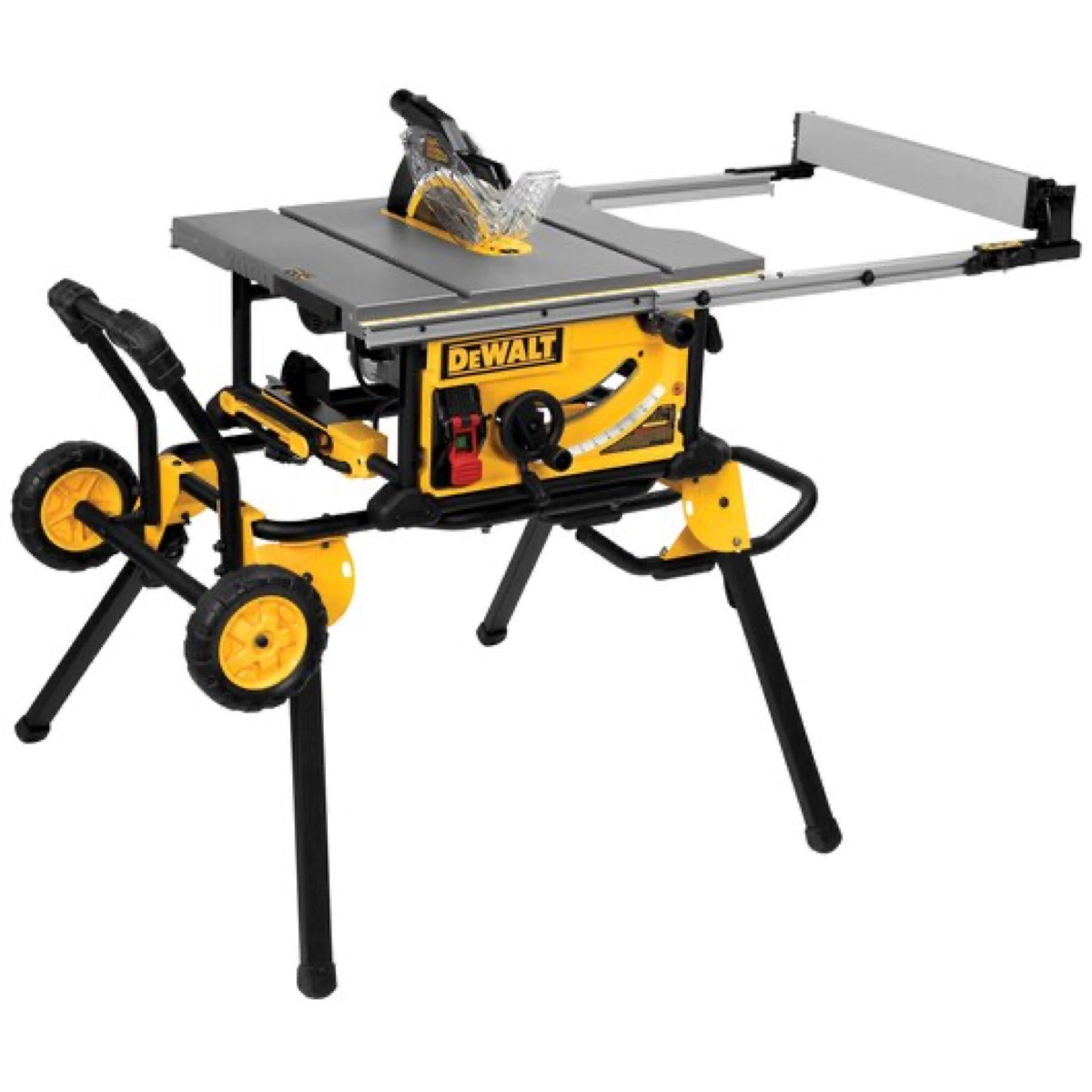
A table saw on the jobsite used to mean accepting compromises — undersized fences, rough cuts, and tables that flexed under load. Modern portable table saws from the major manufacturers have closed much of the gap with stationary cabinet saws, delivering fence systems accurate enough for door jambs, rip capacity for sheet goods, and motors with the torque to handle hardwood and engineered lumber.
The selection problem peaks every spring. Deck rebuilds, fence projects, new construction framing, and interior trim packages all bunch into the same April–June window, and the table saw is the one tool that handles every cut category — ripping treated 5/4 deck boards to width at the rim joist, sizing 2x stock for stair stringers, breaking down 3/4-inch plywood for built-ins, and producing repeatable casing rips that a circular saw cannot match. Choosing the right portable table saw before this window opens determines whether spring projects close on schedule or stall behind tool limitations.
This guide compares four portable jobsite table saws based on published manufacturer specifications, focusing on rip capacity, fence accuracy, motor output, and the practical requirements of moving a saw from site to site. Portable-jobsite decision aid: Treat transport convenience and working support as separate decisions. A saw that is easier to carry or roll may simplify moves between sites, but the stand or support arrangement determines working height, material support, and how readily the setup can be repeated at the next cut location. After that, match rip capacity to the panels and stock you expect to process, confirm the dust port works with the collection equipment available for the job, and favor a fence and support setup you can position consistently when repeated cuts matter.
Portable vs. Jobsite vs. Cabinet: What “Portable” Actually Means
The table saw category splits into three classes, and the terminology is often blurred:
- Portable table saws (also called jobsite table saws) are lightweight (38–65 lbs), use 15-amp universal motors or cordless brushless motors, and are designed to be carried by one or two workers between sites. Every saw in this guide is in this class. The terms “portable” and “jobsite” are used interchangeably by manufacturers — both describe the same category.
- Contractor saws are heavier (200–350 lbs), use belt-driven induction motors, and live on a fixed stand or open base. They are too heavy for daily transport but can be wheeled within a shop. Not covered here.
- Cabinet saws (also called stationary or shop saws) weigh 300–600 lbs, use 3–5 HP induction motors, and are the standard for production cabinet shops and serious home woodworking. Not covered here.
If the saw needs to ride in a truck bed and come out at a different jobsite tomorrow, a portable saw is the correct category. If it lives in one shop, a contractor or cabinet saw is the better long-term tool.
Jobsite Table Saw vs. Cabinet Saw: What You’re Giving Up
Per woodworking machinery standards and manufacturer documentation, the key differences:
| Specification | Jobsite Table Saw | Cabinet Saw |
|---|---|---|
| Weight | 45-65 lbs | 300-600 lbs |
| Motor | 15 Amp (universal) | 3-5 HP (induction) |
| Vibration | Higher | Minimal |
| Fence accuracy | ±0.010” typical | ±0.002” typical |
| Rip capacity | 24-35” | 30-52” |
| Price | $400-$800 | $1,500-$5,000+ |
Jobsite saws use universal (brush) motors that tolerate the vibration and dust of transport better than induction motors. Per manufacturer documentation, universal motors deliver rated power immediately without the startup surge of induction motors, which matters on jobsite circuits. The tradeoff is noise, vibration, and motor life — cabinet saw induction motors run quieter and last longer under sustained production use.
Key Specifications
Rip capacity: The maximum width the fence can be set from the blade. Full sheet goods are 48” wide; a 24-27” rip capacity handles ripping plywood sheets in half. 32” and above allows ripping full-width panels without multiple passes.
Fence system: Rack-and-pinion fences lock parallel via a geared adjustment system. T-square fences use a cam-lock on a straight rail. Per user data and manufacturer claims, rack-and-pinion systems are less prone to fence drift and parallelism error when the fence is repositioned frequently.
Blade tilt: Right-tilt saws tilt the blade to the right (toward the rip fence). Left-tilt saws tilt to the left. Left-tilt is preferred by many professionals because it keeps the bevel cut away from the fence, reducing the risk of kickback on bevel rips.
Top Portable Table Saws by Specification
DeWalt DWE7491RS — Best Overall Jobsite Saw
| Specification | Value |
|---|---|
| Motor | 15 Amp, 120V |
| Blade Size | 10” |
| Rip Capacity | 32.5” right / 22” left |
| Fence | Rack-and-pinion (Site-Pro) |
| Blade Tilt | 0-45° right |
| Max Depth at 90° | 3-1/8” |
| Max Depth at 45° | 2-1/4” |
| Table Size | 26-1/4” x 22” |
| Weight | 90 lbs (with stand) |
| Stand | Included (rolling) |
| Warranty | 3 years |
| Price Range | $550-$650 |
Per DeWalt’s specifications, the DWE7491RS ships with the rolling stand included — a meaningful cost inclusion since comparable rolling stands sell for $100-$150 separately. The rack-and-pinion fence system locks parallel via geared adjustment, and DeWalt specifies that the fence maintains position without drift when repositioned across the full 32.5” rip range. The rolling stand has folding legs that lock out flat for transport and fold down quickly on site.
Best for: General contractors, remodelers, and finish carpenters who need reliable rip capacity and a quality fence in a saw that moves between jobs. The included rolling stand and 3-year warranty make this the most complete package at this price.
Limitation: Right-tilt blade. At 90 lbs with the stand, this is a two-person job to load into a truck bed without a ramp. Motor noise is standard for a universal motor — hearing protection required.
Milwaukee 2736-21HD — Best Cordless Table Saw
| Specification | Value |
|---|---|
| Power | M18 FUEL (18V) |
| Blade Size | 8-1/4” |
| Rip Capacity | 24.5” right |
| Fence | Rack-and-pinion |
| Blade Tilt | 0-45° left |
| Max Depth at 90° | 2-1/2” |
| Max Depth at 45° | 1-3/4” |
| Table Size | 20” x 20-1/2” |
| Weight | 38 lbs (bare) |
| Battery Compatibility | M18 platform |
| Warranty | 5 years |
| Price Range | $600-$800 (with batteries) |
Per Milwaukee’s specifications, the 2736-21HD is a cordless 8-1/4” table saw using the M18 FUEL platform — no power cord required. Milwaukee specifies that the saw runs on two M18 REDLITHIUM HIGH OUTPUT HD12.0 batteries included in the kit. The left-tilt blade design positions bevel cuts away from the fence. At 38 lbs bare, it is the lightest saw in this comparison and can be moved by one person without difficulty.
Best for: Framing crews and trim carpenters working in locations without power access. Attic, roof, and exterior work where running a cord is impractical. The M18 ecosystem coverage makes this a natural addition for Milwaukee-platform users.
Limitation: 8-1/4” blade limits depth of cut (2-1/2” at 90°) compared to 10” saws (3-1/8”). Battery runtime limits extended production cutting — bring extra packs for full-day table saw use.
Skilsaw SPT70WT-22 — Best for Framing and Heavy Cuts
| Specification | Value |
|---|---|
| Motor | 15 Amp worm drive |
| Blade Size | 10” |
| Rip Capacity | 25” right |
| Fence | Rack-and-pinion |
| Blade Tilt | 0-45° left |
| Max Depth at 90° | 3-1/2” |
| Max Depth at 45° | 2-1/2” |
| Table Size | 24-1/4” x 21-1/2” |
| Weight | 49 lbs |
| Stand | Not included |
| Warranty | 1 year |
| Price Range | $550-$650 |
Per Skilsaw’s specifications, the SPT70WT-22 uses a worm drive motor — a gear configuration that trades RPM for torque. Per manufacturer documentation, worm drive motors produce more torque per amp than direct-drive universal motors, which results in less blade slowdown when cutting dense hardwood, LVL beams, and engineered lumber. The left-tilt design and 3-1/2” depth of cut (the deepest in this comparison) make it the strongest performer for cutting thick stock.
Best for: Framing contractors and structural carpenters cutting LVL, PSL, and thick dimensional lumber. The worm drive motor handles heavy stock better than direct-drive competitors at the same price point.
Limitation: Stand not included. Worm drive motors require periodic oil changes (per Skilsaw’s maintenance schedule). The 25” rip capacity is the smallest in this comparison — adequate for rough framing but limiting for sheet goods work.
SKIL TS6307-00 — Best Budget Jobsite Saw
| Specification | Value |
|---|---|
| Motor | 15 Amp, 120V |
| Blade Size | 10” |
| Rip Capacity | 25.5” right / 12” left |
| Fence | Rack-and-pinion |
| Blade Tilt | 0-47° left |
| Max Depth at 90° | 3-5/8” |
| Max Depth at 45° | 2-1/2” |
| Table Size | 21” x 19-3/4” (cast aluminum, expandable to 28-1/2”) |
| Weight | 53 lbs (saw only) |
| Stand | Folding stand with wheels (included) |
| Warranty | 3 years |
| Price Range | $330-$400 |
Per SKIL’s product documentation, the TS6307-00 ships with a rack-and-pinion fence system and a folding stand with wheels — both atypical inclusions at this price point. The cast-aluminum table extends from 21” to 28-1/2” wide via the integrated rip extension. SKIL specifies a 3-5/8” depth of cut at 90°, which is the deepest in this comparison and exceeds the 10” saws from DeWalt by 1/2”. The left-tilt blade design positions bevel cuts away from the rip fence, the same safer geometry used on the Milwaukee and Skilsaw models above.
Best for: Budget-conscious contractors, deck builders, and DIY remodelers who need a 10” portable table saw with a rack-and-pinion fence and an included stand without paying the DeWalt premium. The 3-5/8” depth of cut handles 4x4 cedar and treated stock that other 10” saws can’t clear in a single pass.
Limitation: Smaller rip capacity than the DeWalt (25.5” vs 32.5”) — adequate for ripping plywood in half but not for full-width sheet goods. The included stand is lighter-duty than the DeWalt rolling stand or aftermarket Bosch T4B; it folds for transport but does not roll on rough terrain as smoothly. SKIL’s contractor-segment dealer support network is thinner than DeWalt’s or Milwaukee’s.
Comparison Table
| Model | Rip Capacity | Motor | Depth at 90° | Weight | Stand | Warranty | Price |
|---|---|---|---|---|---|---|---|
| DeWalt DWE7491RS | 32.5” | 15A | 3-1/8” | 90 lbs | Included | 3 years | $550-$650 |
| Milwaukee 2736-21HD | 24.5” | M18 cordless | 2-1/2” | 38 lbs | Not included | 5 years | $600-$800 |
| Skilsaw SPT70WT-22 | 25” | 15A worm drive | 3-1/2” | 49 lbs | Not included | 1 year | $550-$650 |
| SKIL TS6307-00 | 25.5” | 15A | 3-5/8” | 53 lbs | Included | 3 years | $330-$400 |
Best Portable Table Saw by Trade
Per contractor usage patterns and material specification data, jobsite table saw selection varies significantly by trade:
Framers and rough carpenters: Production framers use jobsite table saws primarily for ripping OSB sheathing to width, cutting ridge board and hip rafter stock to length, and ripping lumber for blocking and nailers. Speed and portability matter more than fence precision — a framing crew moves the saw multiple times per day. The Skilsaw SPT70WT-22 is the framer’s saw: the worm drive motor provides the torque to rip through wet, knotty framing lumber and OSB continuously without bogging, and the 15A motor handles 8-hour production use without the thermal cutout trips that universal motor saws experience on hot days. At 49 lbs, it’s the lightest on this list for a worm drive.
Finish carpenters and trim contractors: Finish carpenters need accurate fence systems and square cuts for door casing, base molding, window aprons, and built-in millwork. The critical spec is fence repeatability — a fence that drifts 1/32” between adjustments is unacceptable for casing work where gaps show. The DeWalt DWE7491RS with its rack-and-pinion fence is the finish carpenter’s choice: the telescoping fence rail holds position without play, and the included rolling stand gets the saw to working height quickly without setting it on the floor. The 10-inch blade capacity handles door stiles and panel material that a smaller saw can’t complete in one pass.
Deck builders: Deck builders rip deck boards to width at the ledger and at cut-off edges, cut stair stringers, and rip rim joist material. Treated lumber is heavier and harder than dimensional framing lumber, and it blunts blades faster. The DeWalt DWE7491RS handles treated lumber reliably, and its dust port compatibility with a shop vac reduces sawdust accumulation on outdoor decks where cleanup matters. The rolling stand positions the saw at a convenient height for repetitive stringer layout cuts.
Remodelers: Remodelers use portable table saws for built-in cabinetry, closet system components, wainscoting panels, and door and window trim packages. The Milwaukee 2736-21HD cordless option addresses the most common remodeler problem — lack of nearby power in finished spaces during gut renovations. Running a 15A extension cord from a distant outlet across a freshly installed floor creates a trip hazard and a circuit load problem; a cordless saw eliminates both. The M18 FUEL brushless motor maintains blade speed under the load of ripping 3/4-inch plywood panels, which lower-torque cordless saws cannot sustain.
Cabinet installers and DIY remodelers: Cabinet installation involves scribing fillers, cutting face frame overlaps, and trimming cabinet panels to fit irregular walls. These are intermittent, precision cuts — not production ripping. The SKIL TS6307-00 at $330–$400 handles this work cleanly: the rack-and-pinion fence holds parallel for repeatable scribe cuts, and the 3-5/8” depth of cut clears thicker stock than competing budget saws. For a homeowner or part-time remodeler who needs jobsite-saw capability a few weekends per year, the budget tier saw avoids overpaying for production-tier durability that won’t be utilized.
Spring Construction Season: When Portable Table Saw Demand Peaks
Per lumber yard sales data and contractor scheduling patterns, portable table saw purchases and rentals concentrate heavily in spring:
Deck and fence construction (April–June). Deck permits concentrate in spring, and deck framing and decking installation drive high table saw use — ripping treated 5/4 deck boards to width at the perimeter, cutting stair stringers, trimming rim joists, and notching balusters. Per NADRA data, deck construction peaks in May–June. Privacy fence projects layer on the same demand window, with picket and rail ripping that a table saw handles in a fraction of the time of a circular saw with a straightedge. A contractor building 3–5 decks per season purchases or rents a jobsite table saw specifically for this window.
New construction framing (April–July). Housing starts that broke ground in late winter reach the framing stage in April–June. Production framing crews use jobsite table saws continuously for sheathing cuts, stair rough framing, and interior blocking — generating the bulk of spring saw demand. The torque advantage of the Skilsaw worm drive matters here, where ripping wet 2x stock is a daily occurrence.
Interior remodel and trim packages (April–June). Spring remodels drive demand for accurate table saw cuts in trim and millwork. Kitchen remodels, bathroom renovations, and basement finishing all involve cut sheet goods and trim lumber that a portable table saw handles better than a miter saw alone. The DeWalt rack-and-pinion fence becomes the limiting accuracy factor on door casing and base molding production.
Spring home sale prep. Built-in shelving, closet systems, and millwork refreshes concentrate in March–April as sellers prepare homes for the spring market. These projects require repetitive rip cuts that a table saw performs far faster and more accurately than a circular saw.
Buying window. Tool retailer pricing on portable table saws is typically softest in February and early March, ahead of the spring rush. By late April, contractor demand pushes pricing back to MSRP and stand-alone unit availability tightens. Buying ahead of the season — rather than during it — usually saves $50–$100 and avoids backorder delays.
Dust Collection on Portable Table Saws
Dust collection is the most underrated factor in portable table saw selection for enclosed or occupied spaces. Per OSHA 1926.57 and ANSI O1.1 standards, wood dust is a respiratory hazard; softwood dust is an irritant, and hardwood dust (walnut, oak, mahogany) is classified as a carcinogen by NIOSH.
Most jobsite saws include a 2.5-inch or 4-inch dust port designed to accept a shop vacuum hose. Per third-party evaluations by tool testing organizations, dust capture rates vary significantly across models:
| Model | Dust Port Size | Collector Compatibility | Capture Efficiency* |
|---|---|---|---|
| DeWalt DWE7491RS | 2.5” (adapter incl.) | Shop vac required | ~70-75% at blade guard |
| Milwaukee 2736-21HD | 1.5” integrated | Shop vac required | ~60-65% at guard |
| Skilsaw SPT70WT-22 | 4” port (rear) | Shop vac or dust extractor | ~65-70% at rear |
| SKIL TS6307-00 | 2.5” port | Shop vac required | ~65-70% |
*Third-party efficiency estimates; actual results vary by material and airflow.
For indoor remodel environments (finished basements, kitchen gut renovations, occupied commercial spaces), running a dedicated dust extractor (HEPA-filtered) in series with the saw is the standard practice. Shop vacuums capture larger particles but recirculate fine dust — HEPA extraction is required where fine dust exposure is the concern.
The Milwaukee cordless saw’s 1.5-inch port is the most limited in this group for aftermarket vacuum compatibility. The Skilsaw’s 4-inch rear port is the most extractor-friendly for users with a full-size dust extractor versus a shop vac.
Flesh-Detection Safety Systems
Flesh-detection technology (also called active injury mitigation technology) represents a meaningful safety category that every buyer considering a table saw for frequent use should understand.
How SawStop technology works (per SawStop’s published engineering documentation): A low-voltage electrical signal passes through the blade. When the blade contacts human skin — which has substantially different electrical conductivity than wood — the system detects the change in signal and deploys an aluminum brake cartridge into the blade within 5 milliseconds. The blade stops and drops below the table surface. The cartridge and blade are replaced after activation. Per SawStop’s published data, the system activates in contact scenarios that would otherwise cause serious lacerations.
SawStop portable options: As of 2026, SawStop produces the JOBSITE SAW PRO (model JSS-MCA), a 10-inch portable jobsite table saw with the flesh-detection system. Per SawStop specifications:
| Specification | Value |
|---|---|
| Motor | 15 Amp, 120V |
| Blade Size | 10” |
| Rip Capacity | 24.5” right |
| Fence | T-glide aluminum extrusion |
| Blade Tilt | 0-45° left |
| Max Depth at 90° | 3-1/8” |
| Weight | 49 lbs (without stand) |
| Warranty | 1 year |
| Price Range | $700-$900 |
Trade-offs of flesh-detection systems on jobsite saws:
- Cost: The SawStop JSS-MCA costs $150-$250 more than comparable conventional saws at entry. Each brake cartridge replacement after an activation costs approximately $70-$90.
- False activations: Per SawStop’s documentation, wet, resin-laden, or pressure-treated lumber can trigger false activations if the wood’s electrical conductivity approaches the detection threshold. SawStop includes a bypass mode for cutting conductive materials; third-party user reports indicate false activations are rare but documented in very wet conditions.
- Rip capacity: At 24.5 inches, the SawStop JSS-MCA rip capacity falls between the DeWalt (32.5”) and Milwaukee cordless (24.5”) — adequate for most work but limiting for full-width sheet goods production.
Who should consider the SawStop jobsite saw: Per OSHA 1926.304 and industry loss-control data, table saws produce more severe hand injuries than any other woodworking tool category. For small contractors operating without extensive safety training pipelines, for DIY users who are newer to table saws, or for any jobsite where apprentices or less-experienced workers will use the equipment unsupervised, the accident mitigation value of the SawStop system may justify the premium.
For experienced tradespeople with established blade discipline, guard usage, and riving knife protocols, the conventional saws above offer more rip capacity and lower total cost.
Who This Is NOT For
- Production shops making repetitive cuts all day. A jobsite table saw’s universal motor, lighter fence, and smaller table produce results acceptable for construction but not for production furniture making or precision millwork. A stationary cabinet saw or hybrid table saw is the correct tool for a permanent shop installation.
- Sheet goods ripping without a track saw as an alternative. For ripping full 4x8 panels on a jobsite, a track saw is often safer and more practical — no need to wrestle a full sheet through a table saw on a stand. A track saw crosscuts and rips with equal precision, and is safer for large panel work.
- Dado cuts. Most jobsite table saws do not accept dado blade stacks due to arbor length limitations. For dado work, a stationary table saw or router table is required.
- Buyers without adequate electrical circuits. A 15-amp table saw on a 15-amp circuit with other tools running will trip the breaker. A dedicated 20-amp circuit is recommended for production table saw use.
What You’ll Also Need
- 10” 40-Tooth Combination Blade ($35-$55): A quality combination blade handles both ripping and crosscutting cleanly — the stock blade on most jobsite saws is adequate for rough cuts but leaves tearout on finish work. The Freud LU83R010 and Diablo D1040X are the two most widely specified combination blades for this class of saw. Search: “10 inch combination blade 40 tooth table saw,” “Freud combination blade 10 inch.” Check price on Amazon →
- Rolling Jobsite Stand ($130-$160): If purchasing the Skilsaw SPT70WT-22 (no stand included) or upgrading from the included SKIL stand, a rolling stand with quick-mount system is necessary for safe table saw use off the ground on rough terrain. The DeWalt DWX726 and Bosch T4B are the two most commonly specified aftermarket stands. Search: “rolling jobsite table saw stand,” “DeWalt DWX726 rolling stand.” Check price on Amazon →
- Rip-Cut Circular Saw Guide ($30-$45): A rip-cut guide on a circular saw handles sheet goods breakdown before the pieces are small enough to run through the table saw safely — breaking down 4x8 sheets at the table saw is a two-person job without a support system. Search: “rip cut guide circular saw,” “Kreg rip cut guide.” Check price on Amazon →
- HEPA Shop Vacuum or Dust Extractor ($80-$300): For enclosed spaces and indoor remodels, a HEPA-filtered vacuum connected to the saw’s dust port is necessary for fine dust capture. A standard shop vac recirculates fine particles. Search: “HEPA dust extractor table saw,” “HEPA shop vac fine dust.” Check price on Amazon →
Sources
- DeWalt DWE7491RS product specifications and documentation (dewalt.com)
- Milwaukee 2736-21HD M18 FUEL product documentation (milwaukeetool.com)
- Skilsaw SPT70WT-22 worm drive table saw specifications (skilsaw.com)
- SKIL TS6307-00 10-inch jobsite table saw product documentation (skil.com)
- OSHA 29 CFR 1926.304 — Woodworking Tools Safety Standards
- American National Standards Institute (ANSI) O1.1 — Safety Requirements for Woodworking Machinery
- North American Deck and Railing Association (NADRA) — deck construction season trend data
- SawStop JOBSITE SAW PRO (JSS-MCA) product documentation and engineering overview (sawstop.com)
- NIOSH Current Intelligence Bulletin 62 — Occupational Exposure to Wood Dust
- OSHA 1926.57 — Ventilation standards for construction woodworking operations