DeWalt vs Milwaukee vs Makita: Which Battery Platform Should You Buy in 2026?
The battery platform decision is the most expensive choice a contractor makes outside of a truck. Once five or six batteries sit on the shelf, switching costs easily exceed $1,000 in stranded equipment. At ten or more tools deep, the number doubles. This is not a drill comparison or an impact driver shootout — it is a platform-level analysis designed to help buyers choose the right ecosystem before lock-in takes hold.
All three platforms covered here — DeWalt 20V MAX, Milwaukee M18, and Makita 18V LXT — produce professional-grade cordless tools. None of them are bad. The question is which one aligns best with a specific trade, workflow, and long-term tool needs.
What the Voltage Numbers Actually Mean
Before comparing platforms, the marketing terminology needs to be addressed. The voltage numbers printed on battery packs are misleading.
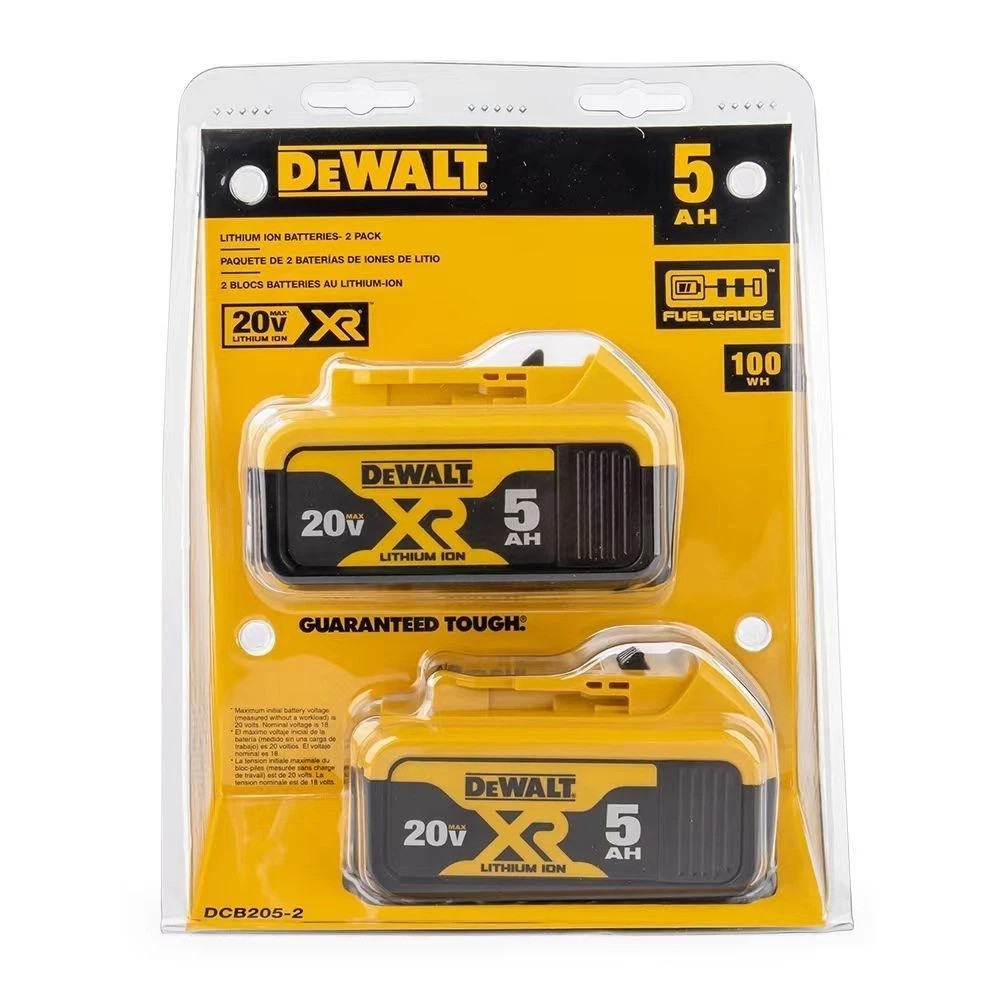
DeWalt labels its platform “20V MAX.” Milwaukee uses “M18.” Makita labels theirs “18V LXT.” All three platforms use battery cells with a nominal voltage of 18V. The “20V MAX” figure that DeWalt uses refers to the peak unloaded voltage of a fully charged lithium-ion cell pack — a measurement standard permitted under ANSI guidelines, but one that overstates the voltage the tool actually receives under load.
Per the electrical specifications:
- DeWalt 20V MAX: 18V nominal, 20V peak unloaded
- Milwaukee M18: 18V nominal, 20V peak unloaded
- Makita 18V LXT: 18V nominal, 20V peak unloaded
The cells are the same voltage class. There is no performance advantage baked into DeWalt’s “20V” label — it is a marketing decision, not an engineering one. Milwaukee and Makita simply chose to label their platforms at the nominal voltage instead.
This distinction matters because some buyers assume DeWalt tools deliver more voltage. According to the electrical specifications from all three manufacturers, they do not. Performance differences between platforms come from motor design, electronics, and battery cell chemistry — not from the number on the label.
Platform Overview Comparison
| Feature | DeWalt 20V MAX | Milwaukee M18 | Makita 18V LXT |
|---|---|---|---|
| Nominal Voltage | 18V | 18V | 18V |
| Marketing Voltage | 20V MAX | M18 | 18V |
| Bare Tools Available | 300+ | 200+ | 300+ |
| Battery Range (Ah) | 1.5–15.0 Ah | 1.5–12.0 Ah | 2.0–6.0 Ah (LXT) |
| Flagship Battery Tech | FLEXVOLT (60V/20V auto-switching) | HIGH OUTPUT (HD cells) | LXT with BL motor optimization |
| Higher Voltage System | FLEXVOLT 60V MAX | MX FUEL (stand-alone system) | XGT 40V MAX |
| Backward Compatibility | FLEXVOLT 60V batteries work in 20V tools | M18 only (MX FUEL is separate) | XGT batteries require adapter for LXT tools |
| Fast Charger Speed | ~60 min (standard), ~30 min (rapid) | ~60 min (standard), ~45 min (rapid) | ~45 min (standard), ~25 min (rapid) |
| Digital Tool Tracking | Tool Connect (Bluetooth) | ONE-KEY (Bluetooth + cloud) | N/A (no integrated tracking) |
| Compact Companion Line | 12V MAX XTREME | M12 (200+ tools) | 12V MAX CXT (limited US) |
| Primary US Retail Partner | Home Depot | Home Depot | Home Depot / Amazon |
| Warranty (tool) | 3 years | 5 years (power tools) | 3 years |
Data sourced from manufacturer catalogs as of March 2026.
DeWalt 20V MAX / 60V FLEXVOLT
Platform Strengths
According to DeWalt’s product catalog, the 20V MAX platform includes over 300 bare tools — the largest lineup tied with Makita globally. Where DeWalt separates itself is the FLEXVOLT system. FLEXVOLT batteries automatically switch between 20V and 60V configurations depending on the tool they are inserted into. This means a single FLEXVOLT 60V battery can power a 20V MAX drill and a 60V MAX table saw without carrying two separate battery systems.
Per DeWalt’s specifications, the FLEXVOLT system is the only platform that bridges the gap between handheld 18V-class tools and the higher-power demands of jobsite saws, planers, and dust extractors within a single battery architecture. Milwaukee’s MX FUEL addresses heavy equipment but uses entirely separate batteries. Makita’s XGT 40V system requires an adapter for backward compatibility.
DeWalt’s saw lineup is widely regarded as the deepest in the cordless space. The 60V MAX 8-1/4” table saw (DCS7485), the 60V MAX 12” sliding miter saw (DCS781), and the FLEXVOLT circular saws give framers and finish carpenters a full cordless saw kit on one battery system.
Platform Weaknesses
DeWalt’s battery cell technology has lagged slightly behind Milwaukee’s HIGH OUTPUT line in energy density per pound. The FLEXVOLT 9.0 Ah (60V) / 3.0 Ah equivalent batteries are heavy — 3.4 lbs per the spec sheet. For overhead and all-day handheld work, that weight penalty adds up.
The warranty is 3 years on power tools, compared to Milwaukee’s 5-year warranty. For contractors running tools daily, two fewer years of coverage is a meaningful difference.
Best Starter Kit
DeWalt 20V MAX XR Brushless 2-Tool Kit (DCK2100D1T1) — Includes hammer drill, impact driver, one 2.0 Ah battery, one 6.0 Ah battery, charger, and bag. Street price: $280-$350.
Milwaukee M18 / M18 FUEL
Platform Strengths
Milwaukee’s M18 platform has become the dominant choice in the electrical, plumbing, and HVAC trades. According to Milwaukee’s catalog, the M18 system includes over 200 tools, but the platform’s real advantage is in specialty tools that other brands do not offer at all: the M18 ProPEX expansion tool, the M18 short-throw press tool, the M18 FUEL sectional sewer machine, and a deep line of right-angle drills and close-quarters tools designed for mechanical trades.
The ONE-KEY system is Milwaukee’s Bluetooth tracking and tool customization platform. Per Milwaukee’s documentation, ONE-KEY allows contractors to set custom speed/torque profiles, lock tools remotely if stolen, and track tool inventory across a fleet. No other platform offers comparable digital tool management.
Milwaukee’s companion M12 system is the strongest compact tool line in the industry, with over 200 M12 tools per the manufacturer’s catalog. Many contractors run M18 for primary tools and M12 for inspection cameras, compact lights, heated gear, soldering irons, and small-profile impact drivers. The dual-system approach (M18 + M12) provides size and weight optimization that single-platform strategies cannot match.
Per Milwaukee’s battery data, the M18 HIGH OUTPUT batteries use optimized cell configurations that deliver more sustained power under load than standard M18 packs. The HIGH OUTPUT HD12.0 Ah battery provides the highest sustained output in the M18 system and is rated for concrete tools and high-draw applications.
Platform Weaknesses
Milwaukee tools tend to be heavier than equivalent Makita models. According to spec sheet comparisons, the M18 FUEL hammer drill weighs 4.1 lbs bare versus Makita’s equivalent at 3.6 lbs. Over a full day of overhead drilling, that half-pound adds up.
Milwaukee’s higher-voltage system (MX FUEL) uses completely separate batteries. There is no backward compatibility with M18 — the MX FUEL batteries are a standalone investment. This contrasts unfavorably with DeWalt’s FLEXVOLT approach, where 60V batteries work in 20V tools.
Best Starter Kit
Milwaukee M18 FUEL 2-Tool Combo Kit (3697-22) — Includes hammer drill, impact driver, two 5.0 Ah batteries, charger, and contractor bag. Street price: $300-$400.
Makita 18V LXT / 40V XGT
Platform Strengths
According to Makita’s global product catalog, the 18V LXT platform spans over 300 tools worldwide — making it the largest or tied-for-largest cordless tool system by sheer count. Makita’s engineering emphasis is on motor efficiency and weight reduction. Per Makita’s specifications, their brushless motors are tuned to extract more work per amp-hour of battery capacity, which translates to longer runtime on equivalent battery sizes.
Makita consistently produces the lightest tools in head-to-head comparisons. The 18V LXT brushless hammer drill (XPH14Z) weighs 3.6 lbs bare tool; the sub-compact drill (XFD15ZB) drops to 2.5 lbs. For finish carpenters, remodelers, and anyone working overhead for extended periods, the weight difference is not trivial.
Makita’s charger technology is the fastest of the three platforms. Per manufacturer specs, the DC18RD dual-port rapid charger can charge a 5.0 Ah battery in approximately 45 minutes, and the DC18RE can charge from automotive 12V, making it useful for jobsite trucks without AC power.
The XGT 40V MAX system provides a higher-voltage line for demanding applications. Makita offers an adapter (ADP10) that allows 40V XGT batteries to power 18V LXT tools, providing some forward compatibility — though the reverse is not possible.
Platform Weaknesses
Makita’s US retail presence is thinner than DeWalt or Milwaukee. While available at Home Depot and Amazon, Makita does not benefit from the same level of big-box exclusive kit deals and in-store promotional pricing that DeWalt and Milwaukee enjoy through their Home Depot relationship.
Makita does not offer a tool tracking or digital customization system comparable to Milwaukee ONE-KEY or DeWalt Tool Connect. For fleet managers tracking hundreds of tools, this is a gap.
The LXT battery range tops out at 6.0 Ah for 18V packs, compared to DeWalt’s 15.0 Ah FLEXVOLT and Milwaukee’s 12.0 Ah HIGH OUTPUT. For high-draw applications like rotary hammers and grinders, the lower maximum capacity means more frequent battery swaps.
Best Starter Kit
Makita XT288T 18V LXT Brushless 2-Tool Kit — Includes hammer drill, impact driver, two 5.0 Ah batteries, rapid charger, and tool bag. Street price: $280-$350.
Best Platform by Trade
The most useful way to evaluate these platforms is by trade specialization. Each brand has invested disproportionately in certain tool categories.
Framing and Carpentry: DeWalt
DeWalt’s FLEXVOLT system provides the strongest cordless saw lineup. The ability to run a 60V table saw, miter saw, and circular saw on the same batteries as a 20V drill and nailer is a significant advantage for framers. According to DeWalt’s catalog, the 60V MAX line includes 8-1/4” table saw, 12” double-bevel sliding miter saw, 7-1/4” circular saw, and reciprocating saw — a complete framing saw set on one battery platform.
Electrical, Plumbing, and HVAC: Milwaukee
Milwaukee’s trade-specific tool depth is unmatched. Per the manufacturer’s catalog, M18 includes ProPEX expansion tools, copper press tools, PVC shears, threaded rod cutters, cable strippers, and knockout punch kits. Combined with the M12 line for close-quarters inspection cameras, stubby impact wrenches, and compact right-angle drills, Milwaukee covers mechanical and electrical trades more completely than either competitor.
Finish Carpentry and Remodeling: Makita
Makita’s weight advantage and motor efficiency make it the strongest choice for all-day handheld use. Finish carpenters, cabinet installers, and remodelers working overhead and in tight spaces benefit from lighter tools that run longer per charge. Per Makita’s specifications, the brushless motor optimization delivers approximately 50% more runtime than brushed equivalents on the same battery — a meaningful difference during long trim-out days.
General Contractor (Mixed Trades): Any Platform
A general contractor who subs out specialty work (electrical, plumbing) and directly handles framing, finish, and general construction can succeed on any of the three platforms. DeWalt and Milwaukee have a slight edge in US availability due to stronger big-box retail partnerships and more frequent promotional kit pricing.
Starter Kit Pricing Comparison
What a $300-$500 investment gets on each platform as of March 2026, based on typical retail pricing:
| Budget Tier | DeWalt 20V MAX | Milwaukee M18 FUEL | Makita 18V LXT |
|---|---|---|---|
| ~$300 | Hammer drill + impact driver, 1x 2.0Ah + 1x 6.0Ah, charger | Hammer drill + impact driver, 2x 5.0Ah, charger | Hammer drill + impact driver, 2x 5.0Ah, charger |
| ~$400 | Above + circular saw or recip saw bare tool | Above + M12 FUEL impact driver kit | Above + circular saw bare tool |
| ~$500 | 4-tool combo kit (drill, impact, circ saw, light) + 2 batteries | Above + additional M18 bare tool | 4-tool combo kit + 2 batteries |
Prices vary by retailer and promotional timing. Home Depot holiday sales (Memorial Day, Black Friday, Father’s Day) typically discount combo kits by 20-30%.
The Lock-In Math
Battery platform switching costs escalate quickly. Here is the approximate cost of stranded equipment at various depths of investment, assuming a mix of bare tools and batteries:
| Investment Depth | Approximate Stranded Cost |
|---|---|
| 3 tools, 2 batteries, 1 charger | $400-$600 |
| 5 tools, 4 batteries, 1 charger | $800-$1,200 |
| 10 tools, 6 batteries, 2 chargers | $1,800-$2,500 |
| 15 tools, 8 batteries, 2 chargers | $2,800-$4,000 |
These figures assume mid-range bare tool prices ($100-$250 each) and battery prices ($60-$150 each depending on capacity). Selling used tools recovers some value, but typically at 40-60% of retail per typical resale market pricing.
The implication is clear: choose the platform deliberately before buying the third or fourth tool. After that point, switching becomes a financial penalty rather than a preference change.
Cross-Platform Compatibility: It Does Not Exist
There is no cross-brand battery compatibility between DeWalt, Milwaukee, and Makita. Third-party battery adapters exist on the aftermarket, but per all three manufacturers’ documentation, using non-OEM batteries or adapters voids the tool warranty and introduces safety risks related to cell chemistry mismatches and overcharge protection.
The only meaningful cross-platform strategy is running two separate ecosystems — most commonly Milwaukee M18 + M12, or a primary 18V platform plus a secondary 12V line for compact tasks.
Who This Is NOT For
-
Homeowners buying one drill. If the total tool collection will stay under three cordless tools, platform lock-in is irrelevant. Buy whatever kit is on sale. A $99 brushless drill kit from any brand handles weekend projects. The platform decision only matters when buying five or more tools on the same battery system.
-
Anyone already 10+ tools deep in a platform. Switching at this point means writing off $2,000+ in batteries, chargers, and muscle memory. Unless the current platform is genuinely failing to cover needed tool categories, staying and supplementing with a second platform for gaps is more cost-effective than a full switch.
-
Buyers who prioritize a single tool’s specs over everything else. If the decision hinges on one drill having 50 more in-lbs of torque, the platform comparison is the wrong lens. Read a drill comparison instead — see the cordless drill buying guide for spec-level analysis.
-
Budget buyers looking for the cheapest option. All three platforms are premium-priced professional systems. Ryobi ONE+ (Home Depot) and Craftsman V20 (Lowe’s) offer significantly lower entry costs for lighter-duty use. Those platforms are not compared here because they target a different buyer segment.
The Decision Framework
Rather than declaring a single winner, the platform decision reduces to three questions:
-
What trade or primary work type defines 80% of tool use? Match the platform to the trade (see “Best Platform by Trade” above).
-
Which platform covers the most bare tools needed in the next 2-3 years? List every cordless tool likely to be purchased and check each manufacturer’s catalog for availability. Gaps matter more than flagships.
-
What do nearby suppliers stock? Tool service centers, local distributors, and big-box availability vary by region. A platform with better local support means faster warranty service and easier battery replacement.
For additional tool-specific comparisons, see the impact driver guide, circular saw comparison, and oscillating multi-tool guide.
Sources
- DeWalt 20V MAX and FLEXVOLT product catalog and specifications (dewalt.com)
- Milwaukee Tool M18 and M12 product catalog and specifications (milwaukeetool.com)
- Makita 18V LXT and 40V XGT product catalog and specifications (makitatools.com)
- ANSI/CTA-2045 battery voltage measurement standards
- Manufacturer warranty documentation (DeWalt, Milwaukee, Makita)