Best Benchtop Milling Machines for Home Shops in 2026
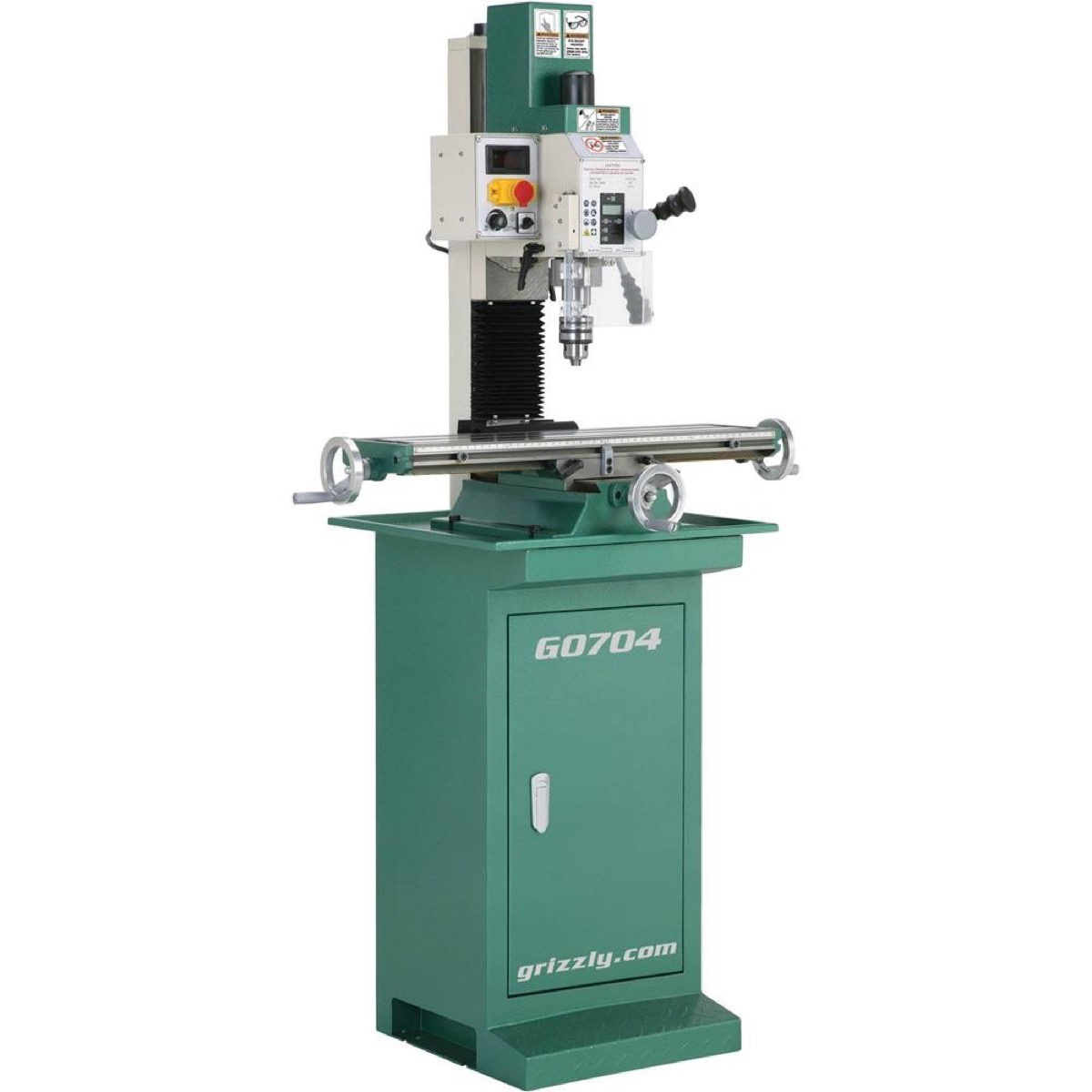
Manual benchtop milling machines occupy a distinct position in the home shop. Unlike CNC mills — which require CAD/CAM software, controller configuration, and programming knowledge before cutting a single chip — a manual mill is ready to make parts the day it arrives. Handwheels, a DRO or dial indicators, and basic machining knowledge are all that stand between the operator and precision metalwork.
For home machinists, prototype builders, and hobbyists who want to learn the fundamentals of milling without a $5,000+ CNC investment, manual benchtop mills deliver real capability in a manageable footprint. These machines cut aluminum, brass, steel, and cast iron using standard R8 or Morse taper tooling available from dozens of suppliers.
This guide evaluates five manual benchtop mills based on published manufacturer specifications, focusing on table size, spindle performance, axis travel, build quality, and total weight.
Why Manual Over CNC
The case for a manual benchtop mill is not about avoiding technology — it is about matching the tool to the work. Based on common use cases documented across machining communities:
- Learning curve: A manual mill teaches feeds, speeds, and workholding through direct feedback. The operator develops intuition for cutting forces and tool deflection that CNC operation abstracts away.
- One-off parts: For single parts, fixtures, and repairs, setting up a CAM program often takes longer than machining the part by hand.
- Lower total cost: Manual mills cost $500 to $2,200 for capable machines. Equivalent CNC benchtop mills start at $2,500 and require additional investment in software and electronics. For a detailed look at CNC options, see our desktop CNC mills guide — but note that those machines serve a fundamentally different workflow.
- Simpler maintenance: No stepper motors, ballscrews, controllers, or electronics to troubleshoot. Manual mills use acme leadscrews and gibs that are straightforward to adjust and replace.
- CNC conversion path: Most manual benchtop mills can be converted to CNC later. Buying manual first lets the operator learn the machine before adding automation.
Top Manual Benchtop Mills by Specification
Grizzly G0704 — Best Overall for Home Shops
| Specification | Value |
|---|---|
| Table Size | 18” x 7” |
| Spindle Taper | R8 |
| Spindle Speed | 50-2,250 RPM (variable) |
| Motor | 1 HP, 110V |
| X Travel | 13.5” |
| Y Travel | 5.5” |
| Z Travel (Column) | 11.75” |
| Headstock Tilt | 45° left / 45° right |
| Weight | 463 lbs |
| Price Range | $1,100-$1,300 |
Per Grizzly’s product specifications, the G0704 uses a 1 HP variable-speed motor driving the spindle through a belt system. The R8 spindle taper accepts the widest range of affordable tooling — end mill holders, collet chucks, drill chucks, and fly cutters are all readily available. According to the manufacturer’s data, the variable speed range of 50 to 2,250 RPM covers everything from large-diameter fly cutting to small end mill work in aluminum.
At 463 pounds, the G0704 offers meaningful rigidity for its price class. The cast-iron column and base absorb vibration during cuts, and the machine’s weight discourages chatter in steel. The 18-by-7-inch table provides enough work surface for most home shop projects, and the 13.5 inches of X travel handles parts that smaller mini-mills cannot accommodate.
The G0704 is also the most popular platform for CNC conversion kits, with multiple aftermarket suppliers offering bolt-on packages that include ballscrews, stepper motors, and mounting hardware.
Best for: Home machinists who want the strongest combination of capability, community support, and upgrade potential at a moderate price point.
Precision Matthews PM-25MV — Best Build Quality
| Specification | Value |
|---|---|
| Table Size | 18.1” x 7.1” |
| Spindle Taper | R8 |
| Spindle Speed | 100-2,500 RPM (variable) |
| Motor | 1 HP, 110V |
| X Travel | 13.75” |
| Y Travel | 5.5” |
| Z Travel (Column) | 9.5” |
| Headstock Tilt | 45° left / 45° right |
| Weight | 480 lbs |
| Price Range | $1,300-$1,500 |
According to Precision Matthews’ technical data sheet, the PM-25MV uses a brushless DC motor with electronic variable speed control. Per the manufacturer’s specifications, the brushless motor delivers consistent torque across the speed range without the brush wear and electrical noise common in brushed motors. The 100 to 2,500 RPM range slightly exceeds the G0704’s high end.
The PM-25MV’s key differentiator is fit and finish. Per owner documentation and manufacturer claims, Precision Matthews machines undergo tighter quality control than mass-market imports, with hand-scraped surfaces on critical mating areas and tighter factory gib adjustments. At 480 pounds, the machine carries slightly more mass than the G0704, and the additional weight is concentrated in the column and base castings.
The PM-25MV is sold direct from Precision Matthews with domestic customer support — a meaningful distinction from machines sold through large retailers where technical support is limited.
Best for: Buyers who prioritize build quality, quieter operation (brushless motor), and responsive customer support, and are willing to pay the premium over the G0704.
JET JMD-18 — Best Drill Press/Mill Combo
| Specification | Value |
|---|---|
| Table Size | 23.5” x 7.875” |
| Spindle Taper | R8 |
| Spindle Speed | 150-3,000 RPM (12 speeds) |
| Motor | 2 HP, 230V |
| X Travel | 15” |
| Y Travel | 5” |
| Z Travel (Quill) | 4.625” |
| Head Tilt | 360° swivel |
| Weight | 587 lbs |
| Price Range | $1,800-$2,200 |
Per JET’s product documentation, the JMD-18 is a mill/drill — a hybrid design that functions as both a heavy-duty drill press and a light milling machine. According to the manufacturer’s specifications, the 2 HP motor on 230V power delivers more spindle torque than the 1 HP machines in this guide, and the 12-speed gear drive handles a broader range of materials and cutter diameters.
The 23.5-by-7.875-inch table is the largest in this comparison, providing substantial work area for longer parts and multiple-vise setups. The 15 inches of X travel further extends the machine’s reach. At 587 pounds, the JMD-18 has the rigidity to take heavier cuts than lighter benchtop mills.
The tradeoff is the quill-feed Z travel of only 4.625 inches — significantly less than column-travel machines. Per the manufacturer data, this limits deep pocket milling operations. The head tilts 360 degrees, which adds versatility for angled drilling and milling but requires careful tramming after each adjustment.
Note that the JMD-18 requires 230V single-phase power. Shops without a 230V circuit will need an electrician to install one, adding $200 to $500 to the total cost.
Best for: Shops that need a dual-purpose machine for both drilling and milling, especially where the larger table and higher horsepower justify the price and 230V requirement.
Erie Tools Mini Milling Machine — Best Budget
| Specification | Value |
|---|---|
| Table Size | 15.75” x 3.94” |
| Spindle Taper | MT3 (Morse Taper #3) |
| Spindle Speed | 100-2,500 RPM (variable) |
| Motor | 350W (0.47 HP), 110V |
| X Travel | 7.87” |
| Y Travel | 3.94” |
| Z Travel (Column) | 8.66” |
| Headstock Tilt | 45° left / 45° right |
| Weight | ~110 lbs |
| Price Range | $500-$700 |
According to the manufacturer’s specifications, the Erie Tools mini mill uses a 350W variable-speed motor and MT3 spindle taper. The MT3 taper is less common than R8 in the benchtop mill market, which somewhat limits tooling options and requires Morse taper collets and adapters rather than the more widely stocked R8 accessories.
At approximately 110 pounds, this machine is light enough for one person to lift onto a bench. That low mass is the fundamental tradeoff: light machines flex under cutting forces, which limits depth of cut and surface finish in harder materials. Per general machining principles documented in the Machinery’s Handbook, rigidity is proportional to mass, and a 110-pound mill will chatter in cuts that a 450-pound machine handles smoothly.
That said, the Erie Tools mini mill is capable of useful work in aluminum, brass, and mild steel with conservative feed rates and shallow depths of cut. For a first-time buyer testing whether milling fits their workflow, the $500-$700 entry point is significantly less commitment than a $1,200+ machine.
Best for: First-time buyers, small-part hobbyists, and anyone who needs basic milling capability at the lowest possible cost and is willing to accept the limitations of a lightweight machine.
Grizzly G0795 — Best Heavy-Duty Benchtop
| Specification | Value |
|---|---|
| Table Size | 26.625” x 7.125” |
| Spindle Taper | R8 |
| Spindle Speed | 75-2,000 RPM (variable) |
| Motor | 1.5 HP, 110V/220V |
| X Travel | 19.5” |
| Y Travel | 7.125” |
| Z Travel (Column) | 15.25” |
| Headstock Tilt | 45° left / 45° right |
| Weight | 727 lbs |
| Price Range | $1,800-$2,200 |
Per Grizzly’s product specifications, the G0795 is the heaviest machine in this guide at 727 pounds — nearly 60% heavier than the G0704. According to the manufacturer, the 1.5 HP motor drives through variable speed control, and the machine accepts both 110V and 220V power for flexibility in different shop electrical configurations.
The G0795’s defining feature is its work envelope. The 26.625-inch table and 19.5 inches of X travel handle parts that exceed the capacity of smaller benchtop mills. The 15.25 inches of column travel provides clearance for tall workpieces and deep milling operations that quill-fed machines cannot reach. Per the manufacturer’s data sheet, the Y travel of 7.125 inches also exceeds the 5 to 5.5 inches typical of smaller machines.
At 727 pounds, floor loading becomes a consideration. This machine requires a robust bench or stand, and transporting it into a home shop may require equipment or assistance. The mass is the machine’s greatest asset during cutting — it resists vibration and chatter at a level that lighter mills cannot match.
Best for: Home machinists who need the largest work envelope and most rigidity available in a benchtop format, and whose shop floor can support the weight.
Comparison Table
| Model | Table Size | Spindle | X / Y / Z Travel | Motor | Weight | Price |
|---|---|---|---|---|---|---|
| Grizzly G0704 | 18” x 7” | R8 | 13.5” / 5.5” / 11.75” | 1 HP | 463 lbs | $1,100-$1,300 |
| PM PM-25MV | 18.1” x 7.1” | R8 | 13.75” / 5.5” / 9.5” | 1 HP | 480 lbs | $1,300-$1,500 |
| JET JMD-18 | 23.5” x 7.875” | R8 | 15” / 5” / 4.625” | 2 HP | 587 lbs | $1,800-$2,200 |
| Erie Tools Mini | 15.75” x 3.94” | MT3 | 7.87” / 3.94” / 8.66” | 350W | ~110 lbs | $500-$700 |
| Grizzly G0795 | 26.625” x 7.125” | R8 | 19.5” / 7.125” / 15.25” | 1.5 HP | 727 lbs | $1,800-$2,200 |
Key Specifications That Matter Most
Not all published specs carry equal weight when evaluating manual benchtop mills. Based on engineering fundamentals documented in the Machinery’s Handbook:
Machine weight is the single most important spec for rigidity. A heavier mill resists cutting forces, reduces chatter, and holds tighter tolerances. The difference between a 110-pound mini-mill and a 727-pound benchtop mill is not incremental — it is structural.
Spindle taper determines tooling compatibility and cost. R8 is the standard for benchtop mills and offers the widest selection of affordable tooling. MT3 (Morse Taper) works but has a smaller ecosystem. Avoid machines with proprietary spindle systems that lock buyers into a single tooling source.
Travel (X/Y/Z) defines what the machine can physically reach. X travel limits part length, Y travel limits part width, and Z travel (column or quill) limits pocket depth and tall-workpiece clearance. Column travel is generally more useful than quill travel for milling operations.
Motor horsepower affects maximum material removal rate, but in practice, machine rigidity is the limiting factor before motor power on most benchtop mills. A 1 HP motor on a rigid 460-pound machine outperforms a 2 HP motor on a flexible 150-pound frame.
Speed range matters for matching spindle RPM to cutter diameter and material. According to standard machining references, milling steel with a 0.5-inch end mill requires approximately 300-600 RPM, while aluminum at the same diameter runs 2,000-4,000 RPM. A range of 50-2,500 RPM covers most benchtop work.
Who This Is NOT For
Manual benchtop mills are capable machines, but they are not the right answer for every buyer:
- If you need to produce identical parts in quantity: Manual machining is a one-at-a-time process. Each part requires the operator to execute every cut by hand. For batch production — even runs of 10 or 20 parts — a CNC mill with programmed toolpaths is dramatically more efficient. See our desktop CNC mills guide for machines designed around repeatability.
- If your parts require complex 3D contours or pockets: Manual milling excels at flat surfaces, steps, slots, and holes. Curved surfaces and complex 3D geometry require either exceptional manual skill or CNC interpolation. A three-axis CNC mill handles these geometries routinely.
- If you cannot accommodate the weight: Even the lightest machine in this guide (the Erie Tools at 110 pounds) needs a sturdy bench. The heavier machines (460-727 pounds) require reinforced benches or dedicated stands, and getting them into a basement or upstairs shop may require professional rigging.
- If your work is exclusively wood or plastic: A manual mill can cut these materials, but it is overbuilt and overpriced for the task. A router table, drill press, or CNC router serves these materials at lower cost and higher speed.
- If you expect precision without learning: A manual mill is a skill-based tool. Achieving tolerances of 0.001 inches requires understanding of tramming, workholding, tool deflection, and measurement. Expect weeks of practice before producing parts that meet tight specifications.
Sources
- Grizzly G0704 product specifications and owner’s manual (grizzly.com)
- Precision Matthews PM-25MV technical data sheet (precisionmatthews.com)
- JET JMD-18 mill/drill product documentation (jettools.com)
- Erie Tools Mini Milling Machine product specifications
- Grizzly G0795 product specifications and owner’s manual (grizzly.com)
- Machinery’s Handbook, 31st Edition — milling fundamentals, cutting speed calculations, and machine rigidity principles