Best Hammer Drills for Concrete 2026: Milwaukee 2904-20 vs DeWalt DCD996B (+ 2 More)
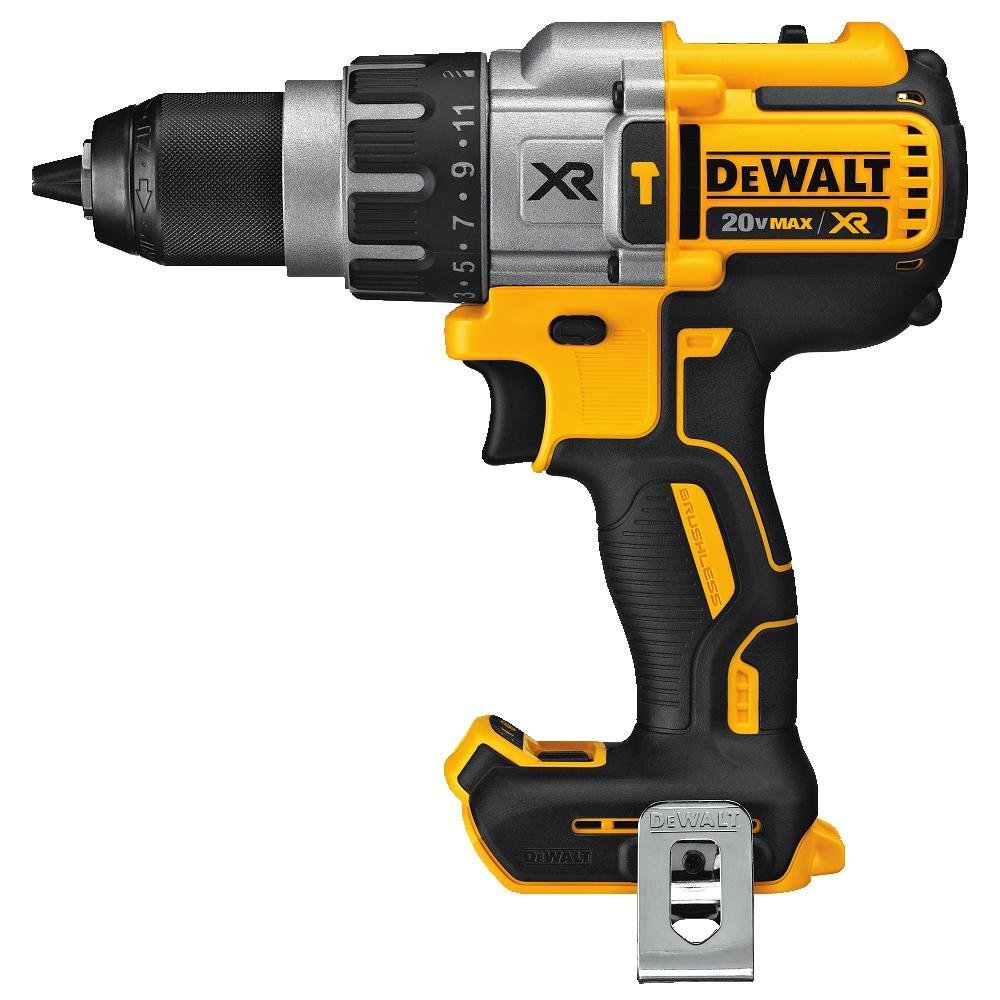
A hammer drill is a standard drill with a percussion mechanism that adds forward hammering blows while the bit rotates. That concussive action fractures concrete and masonry ahead of the cutting edge, allowing standard drill bits to penetrate materials that would stall a conventional drill. For electricians running conduit anchors, plumbers setting pipe hangers, and contractors installing ledger boards, a hammer drill handles the daily masonry tasks that come with every commercial or residential job.
This guide compares four 18V/20V cordless hammer drills based on published manufacturer specifications, focusing on blows per minute (BPM), torque output, and the practical differences between models at similar price points.
Hammer Drill vs. Rotary Hammer: Which Do You Need?
Per Bosch’s application guide and industry references, the distinction matters:
| Feature | Hammer Drill | Rotary Hammer |
|---|---|---|
| Mechanism | Chuck with percussion cam | Piston-driven SDS system |
| Bit system | Standard round/hex shank | SDS-Plus or SDS-Max |
| Max hole in concrete | ~5/8” diameter efficiently | 1”+ with dedicated bits |
| Weight | 4-6 lbs | 5-12 lbs |
| Best use | Anchors, small holes, light masonry | Core drilling, demolition, production masonry |
| Price | $100-$300 | $150-$500+ |
A hammer drill with carbide-tipped masonry bits handles anchor bolts, conduit straps, and ¼”–½” holes in concrete reliably. For 3/4” holes and above, or for production drilling in hard concrete, a dedicated rotary hammer is the more efficient tool. Quick choice: Use a hammer drill for occasional masonry fastening—such as a handful of ¼”–½” Tapcon, conduit-anchor, or post-base holes—with carbide masonry bits. If anchor holes are a recurring part of the workday, an SDS-Plus rotary hammer is the better fit even for smaller 3/16”–3/8” holes because its piston-driven system is built for repeated concrete drilling. Move to a rotary hammer for 3/4” holes or production drilling in hard concrete; the SDS-Plus/SDS-Max guide below separates that rotary-hammer choice by hole size.
SDS-Plus vs. SDS-Max: Choosing the Right Bit System
Once you’ve determined that a rotary hammer (rather than a standard hammer drill) is the right tool for the job, the next decision is bit system. SDS-Plus and SDS-Max are not interchangeable — the shank dimensions differ and tools are specific to one standard.
SDS-Plus is the standard for most contractor and homeowner concrete work. The shank has two open grooves that lock into the chuck, allowing the bit to slide forward-and-back for the piston stroke while still rotating. SDS-Plus bits are available in diameters from 3/16” up to roughly 1”, cover virtually every anchor bolt and conduit application, and are the system found on most cordless rotary hammers in the 18V–36V range (including the Bosch GBH2-28L, DeWalt DCH273, and Milwaukee 2712-20). Bits are widely available at hardware stores and tool suppliers.
SDS-Max uses a larger-diameter shank (18mm vs. 10mm for SDS-Plus) that can handle greater impact energy without the bit walking out of the chuck. This system is found on heavy-duty corded rotary hammers and high-voltage cordless units designed for production drilling and demolition. SDS-Max bits typically start at 1/2” and go up to 2-1/2” or larger for core drilling. The tools are heavier (typically 8–12+ lbs) and generally cost $400–$800+.
Which system do you need?
| Application | Anchor / Hole Size | Material | Frequency | Recommended System |
|---|---|---|---|---|
| Deck ledger anchor bolts | 1/2” holes | Poured concrete / block | Occasional (1–2x/year) | SDS-Plus or hammer drill |
| Conduit anchors, Tapcon screws | 3/16”–3/8” | Concrete, CMU block | Daily (trade use) | SDS-Plus cordless rotary hammer |
| Structural anchor bolts in foundations | 5/8”–7/8” | Hard concrete | Regular contractor use | SDS-Plus rotary hammer |
| Large sleeve/expansion anchors | 1”–1-1/2” | Structural concrete | Production / commercial | SDS-Max corded rotary hammer |
| Core drilling (conduit sleeve, drain) | 1-1/2”+ | Any concrete | Occasional to frequent | SDS-Max with core bit |
The practical conclusion for most readers: if the holes are under 3/4” in diameter and the work is occasional to moderate, a hammer drill with carbide bits handles it. If the holes are 3/4”–1” and the work is recurring, an SDS-Plus rotary hammer is the step up. SDS-Max enters the picture when hole diameters exceed 1” or when demolition chiseling is part of the workflow.
Key Specs for Masonry Performance
Blows Per Minute (BPM): The hammering rate while drilling. Higher BPM produces faster penetration in hard materials. Most professional cordless hammer drills deliver 30,000–60,000 BPM at full speed.
Impact energy (joules) — and why hammer drills don’t publish it. This is the spec that separates a hammer drill from a rotary hammer, and it is the single most misunderstood number in this category. A hammer drill produces percussion by ratcheting two ridged cam plates against each other; each blow is light but very frequent (hence the high BPM figures above). The energy per blow is small — typically a fraction of a joule — and manufacturers generally do not publish a joule rating for hammer drills because the figure would not be flattering and is not how the tool is engineered to be compared. A rotary hammer, by contrast, uses a piston driving a free-flying striker, delivering a much heavier blow that is published in joules: SDS-Plus cordless units commonly land in the 1.7–3.5 J range, and SDS-Max demolition hammers run 5–20+ J. The practical takeaway: if a product page advertises an impact energy in joules, it is a rotary hammer, not a hammer drill. For the hammer drills in this guide, BPM is the meaningful percussion spec; for anything requiring a published joule figure, you are shopping for a rotary hammer instead.
Torque output: Measured in inch-pounds (in-lbs) or Newton-meters (Nm). Relevant for driving large fasteners and twist drilling in wood and steel — less critical for masonry mode, where BPM dominates.
Clutch settings: A multi-setting electronic or mechanical clutch lets the operator dial in torque for driving fasteners without stripping. Essential if the hammer drill doubles as a primary driver on the job.
Chuck size: ½” chucks accept larger bit shanks than ⅜” chucks. For masonry bits up to ½” diameter, either works. Above ½”, a rotary hammer is the appropriate tool regardless.
Top Hammer Drills by Specification
DeWalt DCD996B — Best Overall
| Specification | Value |
|---|---|
| Voltage | 20V MAX |
| Motor | Brushless (FLEXVOLT ADVANTAGE compatible) |
| Max Torque | 1,350 in-lbs |
| Max BPM | 38,250 |
| Speeds | 3 (0-450 / 0-1,300 / 0-2,000 RPM) |
| Chuck | ½” all-metal ratcheting |
| Clutch Settings | 15 + drill + hammer |
| Weight (bare) | 4.2 lbs |
| Warranty | 3 years |
| Price Range | $160-$200 (bare tool) |
Per DeWalt’s specifications, the DCD996B is a three-speed hammer drill with FLEXVOLT ADVANTAGE capability — when paired with a 60V MAX FLEXVOLT battery, the motor draws increased power for demanding applications. The three-speed transmission is a meaningful differentiator: Speed 2 (1,300 RPM) is optimized for self-feeding bits and hole saws, which operate too slowly on Speed 2 of most two-speed drills. The all-metal ratcheting chuck resists loosening under hammering loads better than plastic-sleeve alternatives.
Best for: Contractors who need both a high-performance drill and a capable hammer drill in one tool. The three-speed gearbox handles the widest range of tasks — from precision driving to heavy masonry work.
Limitation: BPM (38,250) is lower than Milwaukee at the same price. In side-by-side masonry comparisons, Milwaukee’s higher BPM produces faster penetration in hard concrete.
Milwaukee 2904-20 — Fastest Masonry Penetration
| Specification | Value |
|---|---|
| Voltage | 18V (M18) |
| Motor | Brushless (POWERSTATE) |
| Max Torque | 1,200 in-lbs |
| Max BPM | 41,650 |
| Speeds | 2 (0-550 / 0-2,000 RPM) |
| Chuck | ½” all-metal ratcheting |
| Clutch Settings | 15 + drill + hammer |
| Weight (bare) | 4.0 lbs |
| Warranty | 5 years |
| Price Range | $150-$190 (bare tool) |
According to Milwaukee’s specifications, the 2904-20 delivers 41,650 BPM — the highest in this comparison — which translates to faster concrete penetration when drilling anchor bolt holes and conduit hangers. Milwaukee’s REDLINK PLUS system monitors temperature and load, adjusting power delivery to prevent damage. The 5-year tool warranty is the longest in this category.
Best for: Electricians and plumbers who drill concrete repeatedly throughout the day. The high BPM is the decisive spec for masonry speed, and the 5-year warranty reflects Milwaukee’s confidence in the platform.
Limitation: Two speeds vs. DeWalt’s three. For applications requiring a mid-speed range (self-feeding bits, hole saws in steel), the two-speed gearbox forces a compromise.
Makita XPH12Z — Best for All-Day Use
| Specification | Value |
|---|---|
| Voltage | 18V (LXT) |
| Motor | Brushless |
| Max Torque | 1,090 in-lbs |
| Max BPM | 30,000 |
| Speeds | 2 (0-550 / 0-2,100 RPM) |
| Chuck | ½” all-metal single-sleeve |
| Clutch Settings | 21 + drill + hammer |
| Weight (bare) | 3.5 lbs |
| Warranty | 3 years |
| Price Range | $130-$165 (bare tool) |
Per Makita’s specifications, the XPH12Z is the lightest hammer drill in this comparison at 3.5 lbs — a 0.5-lb advantage that matters when drilling overhead anchor points for hours. Makita specifies 21 clutch settings — the most in this group — providing finer torque control for delicate fastening applications. The tradeoff is BPM: 30,000 is the lowest in this comparison, meaning slower penetration in hard concrete.
Best for: Contractors whose work involves both masonry drilling and high-volume fastening in wood and metal, where the fine clutch resolution and lighter weight have daily value. Makita LXT platform users.
Limitation: Lowest BPM (30,000) in this comparison makes it the slowest for pure masonry penetration. Not the right choice for contractors who drill concrete as a primary daily task.
Bosch GSB18V-975CB — Best Electronics Package
| Specification | Value |
|---|---|
| Voltage | 18V (CORE18V) |
| Motor | Brushless (EC) |
| Max Torque | 1,330 in-lbs |
| Max BPM | 32,000 |
| Speeds | 2 (0-550 / 0-2,100 RPM) |
| Chuck | ½” all-metal |
| Clutch Settings | 20 + drill + hammer |
| Weight (bare) | 3.5 lbs |
| Warranty | 3 years |
| Price Range | $140-$180 (bare tool) |
Per Bosch’s product documentation, the GSB18V-975CB includes KickBack Control — an inertial sensor that detects binding and shuts down the motor in milliseconds to prevent wrist injury when large-diameter bits catch. This is a genuine safety feature with measurable value for operators drilling large holes in dense materials. The Bosch 18V CORE18V ecosystem is smaller than Milwaukee or DeWalt (approximately 75+ tools) but includes competitive individual tools.
Best for: Contractors who drill large-diameter holes in hard materials where binding is a risk. The KickBack Control system is the most protective safety feature in this class.
Limitation: Smallest battery ecosystem in this comparison at 75+ tools. Contractors already committed to Milwaukee or DeWalt have little reason to add a second platform.
Comparison Table
| Model | Chuck | Percussion Type | Max Torque | Max BPM | Speeds | Weight | Warranty | Price |
|---|---|---|---|---|---|---|---|---|
| DeWalt DCD996B | ½” all-metal | Cam (hammer drill) | 1,350 in-lbs | 38,250 | 3 | 4.2 lbs | 3 years | $160-$200 |
| Milwaukee 2904-20 | ½” all-metal | Cam (hammer drill) | 1,200 in-lbs | 41,650 | 2 | 4.0 lbs | 5 years | $150-$190 |
| Makita XPH12Z | ½” all-metal | Cam (hammer drill) | 1,090 in-lbs | 30,000 | 2 | 3.5 lbs | 3 years | $130-$165 |
| Bosch GSB18V-975CB | ½” all-metal | Cam (hammer drill) | 1,330 in-lbs | 32,000 | 2 | 3.5 lbs | 3 years | $140-$180 |
All four are cam-percussion hammer drills, not piston-driven rotary hammers — none publishes an impact-energy figure in joules because the cam mechanism is not measured that way (see the impact-energy note above). They accept standard ½”-shank carbide masonry bits rather than SDS-Plus bits. Where a job calls for a tool with a rated joule output, that is a rotary hammer, covered in the rotary hammer guide.
Best Hammer Drill by Trade
Different trades use hammer drills differently. Here’s how the specs map to real work environments:
Electricians (conduit anchors, panel mounting, EMT straps): The Milwaukee 2904-20. Electrical rough-in involves drilling dozens of 1/4”–3/8” anchor holes in concrete and block throughout a day — conduit hangers, panel anchor bolts, junction box mounts. The 41,650 BPM is the decisive spec here: faster penetration per hole compounds across a full day. The 5-year warranty holds up across the heavy daily use common to commercial electrical work.
Plumbers (pipe hanger anchors, sleeve anchors in concrete decks): The DeWalt DCD996B or Milwaukee 2904-20. Plumbing rough-in requires drilling through concrete decks for sleeve anchors and setting pipe hanger Tapcon screws in block walls. The DeWalt’s three-speed gearbox is useful for the variety of tasks plumbers run through a single tool — masonry in hammer mode, self-feeding bits in Speed 2, standard driving in Speed 1. If speed-in-masonry is the priority, Milwaukee’s higher BPM wins.
General contractors (ledger boards, post bases, anchor bolts): The DeWalt DCD996B. Ledger board installation — setting anchor bolts into foundation walls or concrete block for deck framing — is one of the highest-volume hammer drill tasks in residential construction. DeWalt’s three-speed transmission and FLEXVOLT ADVANTAGE compatibility make the DCD996B the most versatile tool for contractors who switch between tasks throughout the day.
Remodelers (working in existing structures, cramped spaces): The Bosch GSB18V-975CB. Remodeling work often involves drilling in tight or awkward positions — behind existing framing, in finished basements, overhead into concrete ceilings. The Bosch’s KickBack Control is most valuable here: when a bit catches in unexpected aggregate or rebar, the inertial shutoff prevents the violent torque reaction that injures wrists in confined spaces where bracing is difficult.
Makita LXT platform users: The Makita XPH12Z. If the job site is already standardized on Makita 18V LXT batteries, the XPH12Z integrates without adding a second charging ecosystem. The 21-clutch setting range and 3.5 lb weight are genuine advantages for operators whose work is split between masonry drilling and high-volume fastening in wood framing.
Platform commitment note: If this is your first 18V tool purchase, the hammer drill is one of the better tools to use as your platform anchor — you’ll run the same battery across impact drivers, angle grinders, and circular saws. See the DeWalt vs Milwaukee vs Makita battery platform comparison before committing.
Summer Framing Season: When Hammer Drill Demand Peaks
Hammer drill search interest follows a predictable seasonal pattern that mirrors construction activity. Demand peaks May through August as exterior additions, deck builds, and accessory structures move into the active construction window.
The tasks driving summer hammer drill demand:
Deck ledger board installation. Ledger boards require anchor bolts set into the house rim joist or foundation wall at 16” intervals. In homes built on concrete block or poured foundations, this means drilling 1/2” holes in concrete — a task that exceeds what a standard drill handles. Per ICC deck construction guidelines, ledger attachment requires through-bolts or approved structural fasteners set into concrete with specific embedment depths, making a capable hammer drill essential.
Fence post anchor drilling. Post anchors for wood and vinyl fencing require Tapcon screws or sleeve anchors set into concrete footings or paved surfaces. A 3/16” or 1/4” carbide bit in hammer mode handles this quickly; a standard drill on masonry bits works poorly and wears bits rapidly.
HVAC condensing unit pad anchors. Summer AC season installation involves anchoring condensing unit pads with concrete screws. Residential HVAC installers typically drill 8–12 anchor holes per installation.
Addition and accessory structure foundations. Shed kits, pergolas, and garage additions require anchor bolt installation in new concrete pours or existing slabs — another high-BPM application where the Milwaukee or DeWalt’s performance edge over entry-level hammer drills is most apparent.
For contractors and trades at peak summer volume, this is the period where a hammer drill at the capacity ceiling of what the work requires pays for itself quickly in time saved per job.
Concrete Application Guide: Bit Sizes, Settings, and What Actually Matters
Different concrete jobs have different requirements. Here’s a practical breakdown of the most common applications:
Deck Footings and Concrete Piers
Deck post bases typically require either a J-bolt set before the pour or an expansion anchor drilled into a cured footing. For post base anchors in cured concrete (the common retrofit case), the most common requirement is a 1/2” diameter hole drilled to roughly 3-1/2” to 4-1/2” depth, depending on the anchor manufacturer’s specification. Use a 1/2” SDS-Plus or carbide hammer drill bit. Set the tool to hammer-drill mode, not rotation-only. In standard residential concrete (3,000–4,000 PSI), a capable cordless hammer drill handles this without difficulty. For footings poured to 5,000 PSI or higher (common in engineered deck designs), expect slower penetration — Milwaukee’s higher BPM becomes a more meaningful differentiator here.
Anchor Bolts: Wedge Anchors and Sleeve Anchors
Wedge anchors and sleeve anchors are the fastener of choice for structural connections into cured concrete — sill plates, ledger boards, equipment mounting. The pilot hole must match the anchor diameter exactly; an oversized hole results in a fastener that won’t develop full pull-out strength. Common sizes and their required pilot holes:
| Anchor Diameter | Required Pilot Hole | Typical Embedment Depth |
|---|---|---|
| 1/4” | 1/4” | 1-1/8” minimum |
| 3/8” | 3/8” | 1-1/2” minimum |
| 1/2” | 1/2” | 2-1/4” minimum |
| 5/8” | 5/8” | 2-3/4” minimum |
Always drill at least 1/2” deeper than the required embedment to allow for dust accumulation at the bottom of the hole. Blow out the hole with compressed air (or a blow-out bulb) before setting the anchor — residual concrete dust reduces pull-out strength. Torque requirements vary by anchor manufacturer; follow published installation specs rather than estimates.
Masonry Walls: Brick and Concrete Block (CMU)
Brick and concrete masonry unit (CMU) block behave differently from poured concrete. Block is significantly softer than poured concrete at the face — but the hollow core sections can cause a bit to break through suddenly. Use a lower impact energy setting if the tool offers variable impact force, and drill at moderate speed to maintain control as the bit approaches the hollow core. Overshoot will damage the far face or cause the anchor to miss solid material.
For brick, drill into the brick face rather than the mortar joint wherever possible — mortar joints are softer and may not provide the holding strength that anchors require. If the application calls for anchoring into mortar (repointing ties, for example), consult the anchor manufacturer’s published data for mortar-specific pull-out values.
Slab Work: Expansion Anchors and Mode Selection
Drilling into an existing slab for expansion anchors (equipment mounting, partition walls, MEP penetrations) is one of the most common hammer drill applications. Key considerations:
- Check for rebar before drilling. Rebar scanners (available at tool rental yards or as an add-on to some stud finders) locate reinforcing steel. Hitting rebar with a carbide masonry bit will damage the bit and may not penetrate. If the hole layout can be shifted even an inch, avoid rebar intersections.
- Mode selection matters. Most hammer drills and rotary hammers have at minimum three modes: rotation-only, hammer-drill (rotation + percussion), and hammer-only (chisel mode). For concrete drilling, use hammer-drill mode. Rotation-only will not penetrate concrete efficiently regardless of torque.
- Expansion anchor sizing for slabs. Most expansion anchors into slabs require a minimum slab thickness of 3.5x the anchor diameter. A 1/2” anchor needs at least 1-3/4” of solid concrete beneath the hole bottom — accounting for slab thickness and any fill layers below.
Rent vs. Buy: When Each Makes More Sense
For most tools, the buy-vs-rent math is straightforward. Hammer drills are worth examining because the capability range is wide — from a $99 entry-level cordless to a $600+ SDS-Max rotary hammer — and rental yards typically carry the heavier equipment that most buyers only need occasionally.
When Renting Makes Sense
A single project with limited concrete drilling — one footing pour, a few anchor bolts for a fence, a single equipment base — rarely justifies purchasing a hammer drill or rotary hammer above the entry level. Typical rental rates run roughly $40–$80 per day for a corded rotary hammer (such as the Bosch GBH2-28L or a comparable unit), which is frequently less than the cost difference between a basic hammer drill and a capable one. If the project scope is “drill 8 holes in concrete once,” the rental calculation usually wins.
Rental yards also tend to stock heavier, corded SDS-Max rotary hammers that are impractical to own for occasional use — a 10-lb Hilti TE 60 or equivalent. When the job calls for 1” or larger holes in hard concrete and it’s a one-time requirement, renting the appropriate tool beats buying undersized equipment and fighting the work.
When Buying Makes Sense
For contractors, tradespeople, and homeowners with ongoing concrete work, ownership math shifts quickly. Expect roughly $200–$400 for a capable 18V cordless SDS-Plus rotary hammer (the DeWalt DCH273B, Milwaukee 2712-20, or Bosch GBH18V-26D represent this tier). At a rental rate of $50–$60/day, four to six rental uses covers the purchase price. Any contractor who installs ledger boards, sets pipe hangers, or anchors equipment regularly will reach break-even within a single busy season.
Cordless ownership also has a productivity argument: setup time, transport, and the absence of a cord in a busy site matter when the task is repeated dozens of times per project. Rental also typically involves corded tools, which limits mobility on larger sites or multi-story work.
What rental yards typically stock vs. what you can buy:
| Category | Typical Rental Stock | Ownership Equivalent |
|---|---|---|
| Mid-duty SDS-Plus | Bosch GBH2-28L (corded) | DeWalt DCH273B, Milwaukee 2712-20 |
| Heavy SDS-Max | Hilti TE 60, Bosch 11264 | Bosch GBH18V-45C (36V), Hilti TE 6-A36 |
| Combination (demo + drill) | Bosch 11263EVS | Bosch GBH18V-26D, Milwaukee 2717-20 |
Rental yards vary significantly in their inventory. Call ahead to confirm availability and ask for the specific tool model — “rotary hammer” covers a wide range of equipment, and the difference between a light-duty unit and a heavy SDS-Max matters for production concrete work.
Price Tier Overview
Under $150 — Light-Duty Cordless (Occasional Anchor Bolts)
At this price point, the Makita XPH12Z ($130–$165 bare tool) is the strongest option in this comparison. For occasional masonry work — a few anchor holes per month, Tapcon screws, conduit straps — this tier is adequate. The 30,000 BPM and 1,090 in-lbs torque handle standard residential concrete without difficulty. Buyers who already own Makita LXT batteries get additional value here.
For buyers without a battery platform commitment, bare-tool prices in this range require purchasing a battery separately; budget an additional $50–$80 for a compatible 18V battery if not already part of a kit.
$150–$300 — Mid-Range SDS-Plus Cordless (Contractor-Grade)
The DeWalt DCD996B and Milwaukee 2904-20 both land in this range ($150–$200 bare tool). This is the appropriate tier for tradespeople who drill concrete regularly — the BPM, torque, and brushless motor efficiency are meaningfully better than entry-level cordless options, and both tools will sustain commercial job site use across years of daily work.
For those who want to step into a dedicated SDS-Plus rotary hammer (versus a hammer drill) in this price range, the DeWalt DCH273B and Milwaukee 2712-20 typically run $200–$280 bare tool and provide genuine SDS-Plus piston action — noticeably more capable than any hammer drill for holes 1/2” and larger.
$300+ — Pro-Grade SDS-Plus or SDS-Max
Above $300, the tools shift from cordless hammer drills to dedicated rotary hammers with higher-capacity batteries or corded formats. The Bosch GBH18V-26D (18V SDS-Plus, ~$300–$350 bare) and Milwaukee 2717-20 M18 FUEL (SDS-Max capable, ~$400–$500 kit) represent this tier. These are tools designed for daily production drilling — faster penetration in hard concrete, longer bit life, and more durable internal components than any hammer drill.
Check the Bosch GBH18V-26D on Amazon →
At the $300+ level, most buyers are better served by a dedicated rotary hammer than a more expensive hammer drill. See the rotary hammer buyer’s guide for that comparison.
Who This Is NOT For
- Buyers drilling holes larger than 5/8” in concrete regularly. A hammer drill maxes out at approximately 5/8” in concrete with carbide bits before efficiency drops significantly. For 3/4” and larger holes — anchor bolts in foundations, sleeve anchors in structural concrete — a dedicated rotary hammer with SDS-Plus bits is the correct tool.
- Buyers who only need standard drilling and driving. If masonry work represents less than 10% of your tasks, the percussion mechanism adds weight and cost for capability you rarely use. A standard brushless drill like the Milwaukee M18 FUEL handles wood and metal drilling without the added complexity.
- Tile and stone drilling. Hammer mode will crack tile. Drilling ceramic or porcelain requires a diamond-tipped bit in a standard drill (hammer mode off) at low speed with water cooling.
- Anyone drilling concrete as a full-day, every-day task. A cam-percussion hammer drill works for occasional anchor-setting, but the cam wears and the light per-blow energy means slow going in 4,000+ PSI concrete. Trades drilling concrete continuously — production conduit rough-in, daily anchor work — will be faster and have far longer tool life with an SDS-Plus rotary hammer, where the piston mechanism is built for sustained percussion. The decision rule: occasional anchor-setting → hammer drill; daily concrete → rotary hammer.
Corded vs. Cordless Hammer Drills: Where the Tradeoffs Actually Land
The cordless vs. corded decision for hammer drills is more nuanced than it is for circular saws or impact drivers — because the heavy-duty work (large holes, sustained concrete drilling) is already served better by a rotary hammer. Here’s the honest breakdown for the hammer drill category specifically:
| Factor | Cordless 18V Hammer Drill | Corded Hammer Drill |
|---|---|---|
| Mobility | No cord — works on upper floors, rooftops, scaffolding | Needs outlet or extension cord |
| Power ceiling | Enough for <5/8” holes in standard concrete | Higher sustained power for long runs |
| Runtime | Limited by battery (typically 30–60 min moderate use) | Unlimited |
| Weight | 4.0–4.2 lbs (bare) | 5–7 lbs typical |
| Platform integration | Shares battery with drills, impact drivers, lights | Separate power requirement |
| Price | $150–$200 bare tool (battery extra) | $60–$120 (DeWalt DWD520K, Bosch 11255VSR) |
| Best scenario | Trade use, multi-story work, daily carry | Shop-based work, high-volume masonry runs |
The practical verdict: For tradespeople doing daily concrete work in the field, the cordless 18V options in this guide are the correct tools. For a shop or homeowner who drills concrete infrequently from a fixed location and wants to save battery for other tools, a corded hammer drill in the $80–$120 range performs the same task at a lower cost of entry. The corded DeWalt DWD520K (0–800/0–2,900 RPM, 7.0 amp) is a common point of reference for this use case.
Neither corded nor cordless hammer drills should be selected for the work described under the SDS-Plus or SDS-Max sections above — those require a dedicated rotary hammer regardless of power delivery format.
Frequently Asked Questions
Can a hammer drill actually drill through concrete?
Yes, with limitations. A hammer drill with carbide-tipped masonry bits handles standard holes up to about 5/8” diameter in poured concrete and CMU block — conduit hangers, Tapcon screws, post base anchors, and most residential anchor bolt applications. Above that diameter, efficiency drops significantly and penetration rate slows. Per Bosch’s application guide and industry convention, holes above 3/4” in concrete are better served by a dedicated SDS-Plus rotary hammer, which delivers substantially more energy per blow.
What’s the difference between a hammer drill and a rotary hammer?
A hammer drill uses two ridged cam plates that ratchet against each other to produce percussion — the mechanism adds hammering blows while the bit rotates, but each blow is relatively light. A rotary hammer uses a pneumatic piston system that drives a free-flying striker, producing significantly more energy per blow (measured in joules, typically 1.7–3.5 J for SDS-Plus cordless units). The rotary hammer also uses SDS-Plus or SDS-Max bits that can slide forward-and-back independently of rotation, enabling more efficient energy transfer. Result: for the same hole diameter, a rotary hammer penetrates faster and puts less stress on the operator.
What is SDS-Plus vs. SDS-Max, and which do I need?
SDS-Plus is the standard for most contractor and trade concrete work — bits range from 3/16” to about 1” diameter and fit cordless rotary hammers in the 18V–36V range. SDS-Max uses a larger 18mm shank for heavier impact energy and is found on production corded rotary hammers and heavy-duty cordless units. For most electrical, plumbing, and general contractor concrete work, SDS-Plus is sufficient. SDS-Max is warranted when hole diameters exceed 1” regularly or when the work involves demolition chiseling.
Do I need a rotary hammer or will a hammer drill work?
Use this decision rule: if holes are under 5/8” diameter in standard (3,000–4,000 PSI) concrete and the work is occasional to moderate, a hammer drill handles it. If holes are 5/8”–1”, the work is daily, or the concrete exceeds 4,000 PSI, an SDS-Plus rotary hammer is more efficient and produces lower tool wear. If holes exceed 1”, use SDS-Max. See the full comparison in the rotary hammer buyer’s guide.
Can I use a hammer drill to install Tapcon screws?
Yes — Tapcon installation is one of the primary use cases for a hammer drill. The process: drill a pilot hole with the carbide bit included with Tapcon (typically 3/16” for the standard 1/4” Tapcon), switch to driver mode (hammer off), and drive the screw with an appropriate bit (hex or Phillips depending on the Tapcon head). The hammer drill handles the pilot hole in hammer mode; driving the screw requires rotation-only mode to prevent snapping the relatively small-diameter concrete screw. The Milwaukee 2904-20 and DeWalt DCD996B both handle this workflow without switching tools.
What BPM do I need to drill concrete?
There is no universal minimum, but the professional-grade cordless hammer drills in this guide range from 30,000 BPM (Makita XPH12Z) to 41,650 BPM (Milwaukee 2904-20). Higher BPM produces faster penetration in hard materials — the difference is meaningful in 4,000+ PSI concrete but less significant in soft CMU block. For occasional residential concrete work, 30,000 BPM is adequate. For daily high-volume anchor-setting in commercial concrete, the additional BPM of the Milwaukee is a genuine time saver compounded across a full work week.
Should I get an impact driver or a hammer drill?
Different tools, different jobs. An impact driver delivers rotational impacts optimized for driving fasteners — it does not produce forward percussion and cannot drill masonry. A hammer drill provides forward hammering (percussion) for masonry and concrete work, plus standard drill and drive modes for wood and metal. If concrete drilling is part of the work, a hammer drill is the correct tool. If the work is exclusively fastener driving and wood/metal drilling, an impact driver plus standard drill covers it without the added weight of the hammer mechanism. Many tradespeople carry both.
What You’ll Also Need
- Bosch HC2167 Carbide-Tipped Hammer Drill Bit Set (7-piece) ($25-$40): SDS-style carbide bits cover the common anchor hole diameters (3/16” to 1/2”) — standard twist bits will not penetrate concrete regardless of BPM. Check price on Amazon →
- Tapcon 1/4” x 2-3/4” Concrete Screws (75-pack) ($20-$35): Tapcon is the industry standard for anchoring into concrete and block — paired with the correct carbide bit (included with Tapcon), these are the fastener most contractors reach for first. Check price on Amazon →
- Klein Tools 6-in-1 Screwdriver ($12-$18): A combination screwdriver rounds out the anchor-setting process — Tapcon hex heads require a nut driver that most multi-bits cover in a combination driver format. Check price on Amazon →
Sources
- DeWalt DCD996B product specifications (dewalt.com)
- Milwaukee 2904-20 M18 FUEL product documentation (milwaukeetool.com)
- Makita XPH12Z 18V LXT specifications (makitatools.com)
- Bosch GSB18V-975CB product documentation (boschtools.com)
- Bosch Power Tools — Hammer Drill vs. Rotary Hammer Application Guide
- ITW Ramset/Red Head — anchor selection and drilling guide